Japan’s 20s Idols Enter Politics, North Korea Promotes E-Sports amid Global Shifts in Cultural Policy
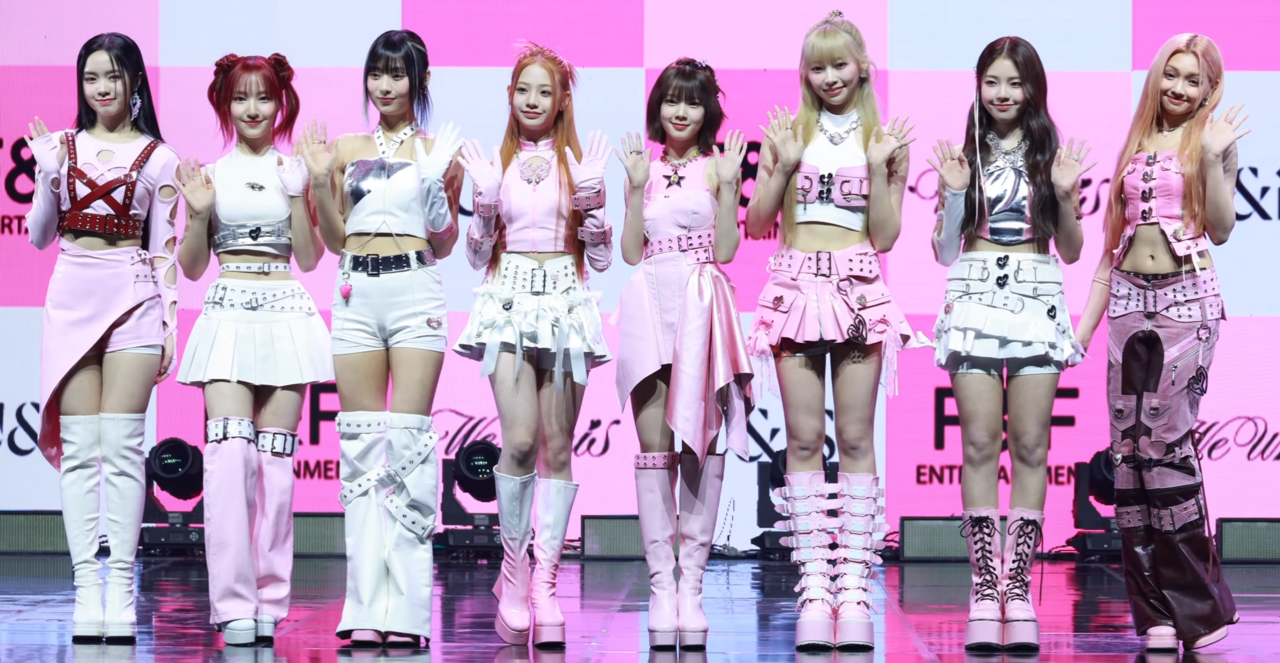
Photo 티비텐 / CC BY 3.0 — Wikimedia Commons
Simultaneous moves to integrate culture and politics are drawing attention in both Japan and North Korea.
In Japan, Nana Uragami (25), a former member of the Nagoya-based idol group “Tera,” officially announced her candidacy for the 51st House of Representatives elections on the 22nd at the Nagoya City Government Press Club. Affiliated with the Nippon Ishin Party, Uragami declared her entry into politics by stating she would pursue a political agenda that holds future responsibilities for younger generations.
Meanwhile, as curiosity among younger generations toward K-pop grows in North Korea, the country is implementing policies to satisfy its internal “cultural needs.” On the 18th, an article titled “A New Form of Sports Activity—Electronic Sports” was published in the North Korean newspaper Rodong Sinmun. The article described e-sports as “a new form of sports activity where virtual players are controlled via computer according to game rules to compete against opponents,” emphasizing that it allows anyone regardless of physical ability, age, or gender to participate without risk of injury, while also enhancing people’s intellectual capacity and concentration.
It is highly unusual for North Korea, which has traditionally been conservative toward gaming culture, to explicitly mention the term “e-sports” in its official media and highlight its positive aspects. In particular, Rodong Sinmun redefined e-sports as an “organized sports activity” going beyond the concept of mere entertainment. Last April, a “Computer Entertainment Center” was completed in the Hwaseong district of Pyongyang. At that time, Kim Jong Un, General Secretary of the Workers’ Party, visited the center alongside his daughter Ju Ae, calling it “the first facility of its kind in our country dedicated to service,” and instructed officials to pay special attention to preparing its operation.
Experts analyze North Korea’s changes in relation to the bilateral hostile relationship between the two nations. Since 2021, North Korea has enacted laws such as the Anti-Counterrevolutionary Ideology and Culture Law, the Youth Cultivation Guarantee Law, and the Pyongyang Cultural Language Protection Law to strengthen ideological control over youth and block cultural influences from outside, including South Korea. Yet at the same time, it appears to be making efforts to introduce new cultural elements to soothe public sentiment among younger people.
Im Eul-chul, a professor at the Institute for Far Eastern Studies at Kyungnam University, noted that instead of completely blocking external, stimulating gaming cultures from countries like South Korea, North Korea manages its youth by promoting a “North Korean-style digital entertainment culture” that has undergone its own filtering process. Im added that North Korea has recently placed strong emphasis on robotics and artificial intelligence (AI) education for students, likely aiming to naturally improve their computer operation skills and understanding of networks among younger generations.
On another front, the American music distribution company Too Lost reported annual sales exceeding $100 million in 2025 and projects nine-digit revenues for 2026. Founded in 2020, Too Lost collaborates with approximately 400,000 labels and artists. Last year, it released 2.3 million new tracks, with 100,000 new artists and labels joining the platform.
발행·편집 책임: 국기봉 · KPOP Signal editorialThis article was written with AI from verified source material and passed automated checks before publication. It may contain factual errors. AI disclosure · Request a correction
Comments (0)
No comments yet — be the first to start the conversation.