Hundreds of Billions Won in K-pop Royalties Vanish in China Amid Severe Corruption Within the Music Copyright Association
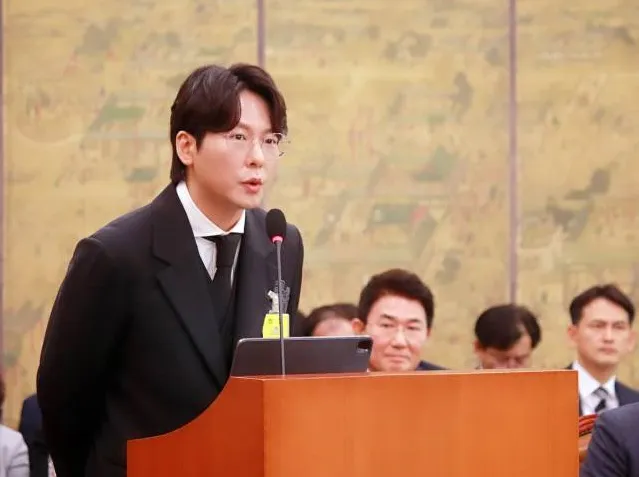
Widespread corruption within the Korean Music Copyright Association has been fully exposed. Hundreds of billions of won in K-pop royalties collected from China have failed to reach domestic creators, while excessive salaries for executives and opaque fund management persist inside the association. Hara, an executive who testified at a parliamentary audit held by the Culture, Sports and Tourism Committee on the 14th, revealed that “Chinese platforms paid the royalties, but the money disappeared without reaching domestic creators.” Specifically, it was found that Tencent, a Chinese digital streaming and download company, paid the royalties, yet intermediaries acting as publishers with unclear contractual relationships intercepted the funds. This executive also stated that “numerous testimonies confirm publishers connecting Korean distributors with Tencent embezzled music revenue,” highlighting that the income owed to domestic distributors is also distributed in an opaque manner. Additionally, the executive argued that “although K-dramas are highly popular worldwide, no settlement has been made for OTT royalties,” noting that “foreign music writers receive royalties from platforms like Netflix, but Korean writers are excluded.” According to Kim Jae-won, a member of the Culture, Sports and Tourism Committee from the Joonguk Innovation Party, South Korea collected only an average of 400 million won in K-pop royalties from China over the past 10 years. However, given that Tencent Music’s annual revenue exceeds 6 trillion won with K-pop accounting for up to 10% of that amount, hundreds of billions of won in royalties have effectively vanished each year. Kim called on the Ministry of Culture, Sports and Tourism to immediately launch a comprehensive investigation, recover illegal gains, and prosecute those involved.
The corruption within the Music Copyright Association is equally severe. Over the past 9 years, the association has paid out more than 8.5 billion won in salaries to its executives. A total of 2.8 billion won was given to the president alone, including 1.05 billion won in a base salary, 1.47 billion won in business expenses, and 0.27 billion won in travel expenses. During the same period, non-executive directors received a total of 5.71 billion won, of which 4.64 billion won—81.2% of the total—was spent on meeting fees. Although the Ministry of Culture, Sports and Tourism issued an order last year demanding “setting a ceiling on meeting fees and adjusting executive salary standards,” the association failed to comply. Instead, it significantly increased the president’s base salary. While the president’s base salary was 180 million won in 2024, it rose by 79% to 193 million won starting in March 2025. The association also retroactively collected approximately 99 million won in unpaid amounts at once. Comparisons with other public institutions further highlight the excesses of the Music Copyright Association. In 2024, the Korea Content Promotion Agency’s annual business expense allowance was 42 million won, the Korea Tourism Organization’s was 20 million won, and the Korea Copyright Commission’s was only 9 million won. In contrast, the president’s business expense allowance was around 170 million won, 4 to 10 times the average of public institutions. As of 2024, the average meeting fee per non-executive director at the Music Copyright Association was approximately 30 million won, with the highest recipient receiving 48.7 million won.
An even more serious issue is the opaque management of YouTube residual fees. According to the Together for Music Copyright Association, since 2018, the Music Copyright Association has received residual fees on behalf of South Korean music creators from Google (YouTube) that exceed 100 billion won. Yet, the association failed to properly disclose this fact to the public, keeping the funds in its own accounts before distributing them only to its internal members. The Together for Music Copyright Association argued that “the fact that Google and the Music Copyright Association unilaterally assigned over 100 billion won in residual fees to the association without proper agreement violates the rights that should belong to many music creators.” It also criticized the association for “ignoring principles of transparency and fairness by not disclosing relevant settlement data and distributing only a portion arbitrarily.” In February of this year, the Together for Music Copyright Association filed a lawsuit against the Music Copyright Association seeking the return of unjustly obtained funds, and in September, it filed criminal charges under the Special Economic Crime Punishment Act for embezzlement. Following this scandal, movements for class-action lawsuits are spreading among creators who are not members of the Music Copyright Association.
Meanwhile, tensions over royalty payments between the media industry and the Music Copyright Association are intensifying. Four organizations representing broadcasting, IPTV, and OTT industries alleged that the Music Copyright Association “labels media companies as copyright violators and abuses criminal prosecutions as a bargaining tactic.” They argued that despite being a trust organization approved by the government, the association misuses criminal prosecution instead of negotiation. The media industry also claimed that “the Music Copyright Association imposes excessive royalties regardless of usage levels and abuses its market dominance,” urging it to ▲stop criminal prosecutions ▲avoid negative statements about media companies ▲cease imposing excessive royalties unrelated to usage levels ▲stop abusing market dominance and filing excessive administrative lawsuits. In response, the Music Copyright Association argued that “the damage caused by some companies using music works illegally for years without paying royalties amounts to hundreds of billions of won, and this harm is being passed on to tens of thousands of creators.” It further emphasized that “the growth of the media industry should rely on content quality and service competitiveness, not at the expense of creators.” Currently, both sides are in negotiations over royalty calculation standards and management ratios but have yet to reach an agreement. The Ministry of Culture, Sports and Tourism stated that “if either side formally requests mediation after negotiations fail, the government will intervene.”
발행·편집 책임: 국기봉 · KPOP Signal editorialThis article was written with AI from verified source material and passed automated checks before publication. It may contain factual errors. AI disclosure · Request a correction
Comments (0)
No comments yet — be the first to start the conversation.