From K-POP Arenas to Special Museum Exhibitions... The Cultural Influence of K-POP Grows Stronger
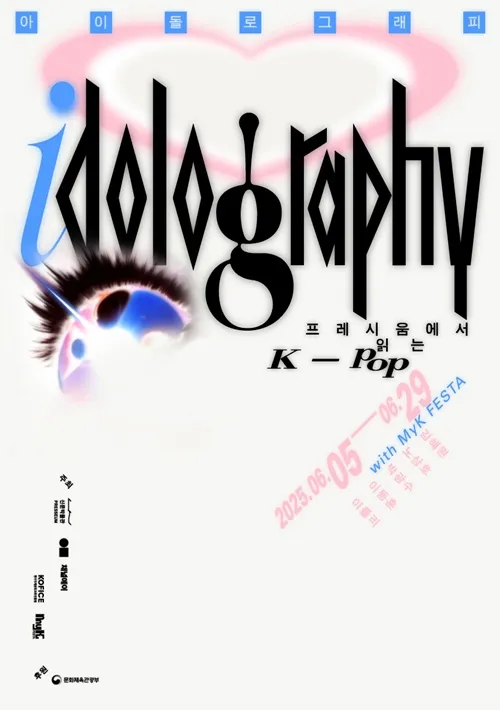
Major projects are underway to elevate the cultural and industrial significance of K-POP. The Newspaper Museum (Presium) will host a summer special exhibition titled “Idolography: Reading K-POP at Presium with MyK FESTA” from June 5 at Ilmin Museum in Gwanghwamun until June 29. The exhibition name “Idolography” combines “idol,” a symbol of popular culture, with “-graphy,” which refers to recording and visual techniques, reflecting the aim to explore the K-POP phenomenon from various perspectives. The exhibition is divided into four sections. The first section, “Reading K-POP through Media,” examines the interaction between K-POP and media using rare archival materials from Dong-A Ilbo and Dong-A Broadcasting held by the Newspaper Museum. The second section, “Reading K-POP through Modern Art,” features paintings, sculptures, videos, and installations created by modern artists such as Kim Hye-won, Noh Sang-ho, Park Gwang-soo, Lee Dong-hoon, and Lee Pli, all inspired by K-POP. The third section, “The Chronicle of Idols,” traces the lineage of idol groups that represented different eras, from Kim Wan-seon in the 1980s to today’s fifth-generation idols. The final section, “The Idol Who Started It All,” looks back at the musical career of Jeong Hoon-hee, who was a pioneer of Hallyu idols, and is linked to a Channel A documentary in which she, along with her husband Kim Tae-hwa, Insooni, Park Sang-min, and Park Gu-yoon, discuss the past and present of K-POP. The Newspaper Museum is organizing this exhibition with the support of the Ministry of Culture, Sports and Tourism, in collaboration with Ilmin Museum, Channel A, and the Korea International Cultural Exchange Promotion Agency. Meanwhile, the government is also working to expand the infrastructure for the K-POP industry. One of the key promises made by President-elect Lee Jae-myung is to build K-POP arenas capable of accommodating over 50,000 spectators. With no permanent venues in South Korea currently designed specifically for K-POP that can hold more than 10,000 people, the construction of such super-large arenas is seen as a crucial factor for significantly expanding the performance industry. Previously, large sports stadiums such as Jamsil Sports Complex, Goyang Sports Complex, Incheon Inspire Arena, and Incheon Munhak Stadium were used for K-POP performances. Seoul’s KSPO DOME and Gocheok Dome also had capacity limits of 15,000 to 25,000 people each. As global interest in K-POP continues to rise, there is an increasing number of overseas artist tours to South Korea. As of April last year, 1,707,113 foreign tourists visited Korea, a 104.4% increase compared to April 2019. The “2025 Weverse Concert Festival” held at Incheon Inspire Arena from April 31 to May 1 attracted over 26,000 attendees from home and abroad, setting a record for the largest scale ever. The construction of comprehensive arenas capable of holding large crowds is expected to have a decisive impact on the expansion of South Korea’s cultural industry.
발행·편집 책임: 국기봉 · KPOP Signal editorialThis article was written with AI from verified source material and passed automated checks before publication. It may contain factual errors. AI disclosure · Request a correction
Comments (0)
No comments yet — be the first to start the conversation.