Despite K-Pop’s Global Popularity, Japan and China Still Lead Asian Music Industries Amid Concerns Over “Hallyu Fatigue”
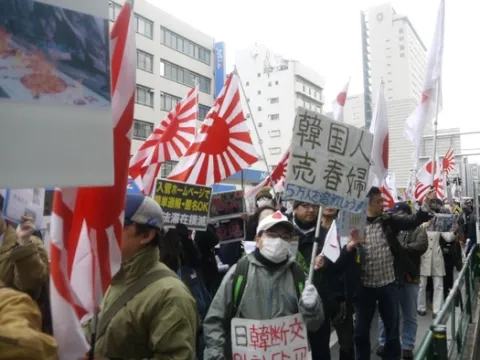
Even as K-Pop continues to spread globally, Japan and China remain ahead of South Korea in terms of the scale of their music industries. At the same time, a polarized trend is emerging in some countries, marked by growing Hallyu fatigue and hate culture. When comparing the sizes of Asia’s music industries, the disparity in market size is evident. Japan maintains the world’s second-largest music market, thanks to its population of 125 million, with steady annual growth projected at around 3.6% through 2028. Physical media such as CDs still show strong sales performance, and Japan’s true strength lies in its live entertainment sector, which is estimated to be worth $2.8 billion in 2024. Tokyo continues to host major global tours and international collaborations, and its opera houses, orchestras, and established record labels working alongside digital innovators have solidified its role as a crossroads for Asia’s music scene. China drives its creative industries backed by a population of 1.4 billion. According to data from consulting firm PwC, China’s creative industries are expected to grow at 7% annually. These industries are propelled by streaming platforms such as Tencent Music and NetEase Cloud Music, along with government-supported cultural initiatives. In 2023, the Chinese government reported that its cultural and creative industries grew by 16% compared to the previous year, accounting for approximately 5% of its gross domestic product. In contrast, South Korea’s digital music market was valued at $1.35 billion in 2024. Although relatively smaller in scale, South Korea achieved global success through a deliberately systematic approach. In Japan, concerns regarding Hallyu fatigue have recently surfaced. Leading Japanese media outlets analyze that the Hallyu wave, which once inspired admiration for K-Pop, K-dramas, K-beauty, and even South Korean lifestyles as a whole, is now facing strong headwinds due to hate culture promoted by certain far-right groups. Political hatred, incitement, and cultural fatigue are cited as reasons behind the decline of Hallyu. Some conservative and far-right media outlets and online communities go beyond viewing Hallyu merely as cultural content, instead framing it as “cultural infiltration” with hidden political intentions by the South Korean government, thereby inciting rejection. At the same time, there is an analysis suggesting that the explosive increase in K-Pop groups and drama content over the past decade has led to a “market saturation” situation. With new groups emerging continuously and dramas featuring similar storylines repeating themselves, Japanese consumers are responding with statements such as “It’s getting boring now.” Hallyu is no longer a fresh “shock” but has become a familiar and ordinary “part of daily life.” This fatigue is prompting younger generations to turn their attention away from K-Pop toward J-Pop or other Asian cultures. Experts advise that South Korea should not view the “headwinds” facing Hallyu in Japan as a mere temporary issue, but rather should use this crisis as an opportunity to develop more advanced cultural strategies. There is a strong emphasis on shifting from quantitative expansion to qualitative depth, expanding cultural exchanges between South Korea and Japan, and diversifying markets. While Hallyu remains important, analysts suggest it is necessary to continuously explore high-potential markets in North America, Europe, South America, and elsewhere to reduce reliance on specific regions.
발행·편집 책임: 국기봉 · KPOP Signal editorialThis article was written with AI from verified source material and passed automated checks before publication. It may contain factual errors. AI disclosure · Request a correction
Comments (0)
No comments yet — be the first to start the conversation.