"Dancers' Names Missing from Music Shows and Music Videos; Call for Protection of Their Right to Credit at National Audit"
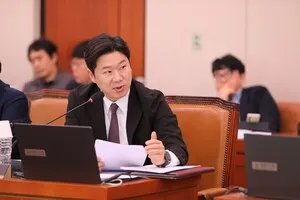
During the National Audit by the National Assembly’s Culture, Sports and Tourism Committee, a serious issue was raised regarding the inadequate systematic protection of choreographers’ right to credit as key creators in the K-pop industry. On the 14th, Jin Jong-oh from the People Power Party sharply criticized the Ministry of Culture, Sports and Tourism, stating, “Although the government claims it will invest 51 trillion won over the next five years to expand the Hallyu industry to a value of 300 trillion won, protecting the rights of its core creators is being neglected.” Jin pointed out that K-pop has evolved from “music meant to be heard” to “music meant to be seen,” yet “the names of choreographers are nowhere to be found in music shows, music videos, or OTT platforms.” This indicates that despite the increased importance of choreography in visual media, basic copyright attribution for creators remains absent. What is even more serious is that the fundamental rights of these creators are being violated. Jin explained that some choreographers post their work on social media only to have it deleted at the request of their agencies or restricted from being shared for a certain period. He emphasized that the practice of censoring creators’ right to credit based on agency discretion represents a serious human rights issue and a reflection of industry imbalance. Jin highlighted institutional flaws by referencing Article 26 of the Korea Content Promotion Agency’s “Content Support Project Management Rules,” criticizing it for stipulating copyright ownership solely centered around institutions without any provisions to protect individual creators’ rights. This suggests that even content funded by government support allows choreographers and directors to be excluded from having their rights recognized. Data from the Korea Copyright Commission also confirms this reality. According to the figures cited by Jin, “there have been only 2 complaints related to choreography copyright and 0 mediation requests in the past five years.” Jin explained that this is not because no harm occurs, but due to institutional gaps that make it impossible to raise such issues at all. The government’s response has also been insufficient. Jin noted that the development of standard choreography contracts promoted by the Ministry of Culture, Sports and Tourism has remained stuck in the “negotiation phase” for years, urging the creation of a legal framework that enables creators to receive actual protection within an unbalanced contract structure with agencies. During his final question, Jin strongly demanded that the government report promptly on specific timelines and methods for implementing mandatory credit placement for choreographers in music shows and OTT platforms. In response, Culture, Sports and Tourism Minister Choi Hwi-young admitted that “it is a reality that creators are not receiving adequate protection” and promised to incorporate the right to credit into institutional frameworks so that choreographers and other creators can be properly safeguarded.
발행·편집 책임: 국기봉 · KPOP Signal editorialThis article was written with AI from verified source material and passed automated checks before publication. It may contain factual errors. AI disclosure · Request a correction
Comments (0)
No comments yet — be the first to start the conversation.