Tencent Becomes Second-Largest Shareholder in SM Entertainment as Efforts to Dominate K-Pop Market Intensify, Sparking Mixed Reactions on Opportunities and Threats
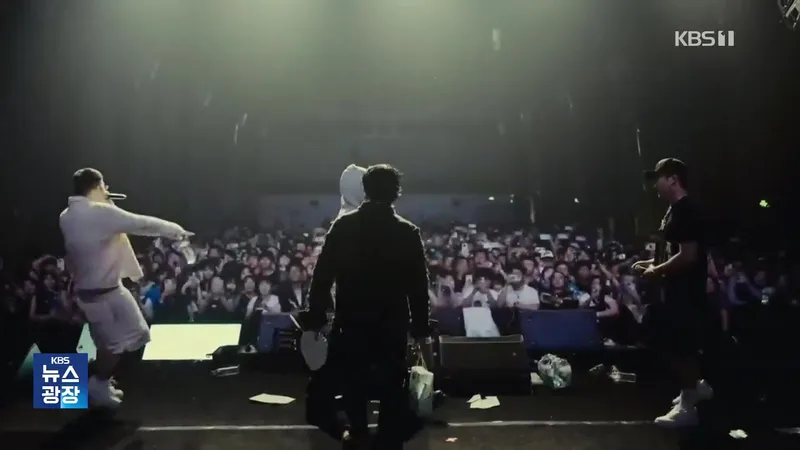
China’s major IT company Tencent is accelerating its entry into South Korea’s K-Pop market. In recent months, Chinese capital has rapidly acquired stakes in K-Pop agencies, leading to divided opinions regarding whether this represents an opportunity for industry growth or a threat. Tencent has recently secured second-largest shareholder status in SM Entertainment. SM Entertainment has announced joint ventures with Tencent, including the debut of Chinese idols, signaling its full-scale push into the Chinese market. Tencent’s market size is approximately 818 trillion won, 267 times larger than that of SM Entertainment. What is even more concerning is that Tencent has already acquired significant stakes in other major domestic agencies as well. The combined market size of South Korea’s top four agencies still amounts to only one-fourth of Tencent’s. Tencent’s moves align with the relaxation of the “Hanbanryeong” (restrictions on Korean culture) policies, which were triggered when a South Korean hip-hop group returned to Chinese stages and released a Mandarin album there in April after an eight-year absence. Although China officially denies allowing South Korean content to be distributed within its borders, it has effectively restricted such content inflows. With signs of eased regulations, South Korea’s entertainment industry is seeing renewed momentum in entering the Chinese market. Shim Hee-chul, a professor in the Entertainment Management Department at Dong-A Broadcasting University, commented, “Tencent’s actions appear aimed at benchmarking South Korea’s K-Pop DNA, and exchanges are necessary for mutual needs and industry development.” However, Lee Dong-yeon, a professor at the School of Traditional Arts at the Korea National University of the Arts, expressed concern. She warned, “If these investments by Chinese companies proceed without thorough scrutiny, South Korea’s content market could be sold to China or deteriorate in the long term.” Tencent’s influence extends beyond K-Pop. Strong activity is also evident in the gaming industry. Tencent holds 17.5% of shares in game developer Netmarble, 13.6% in KRAFTON, 20.7% in Webzen, and 40% in Shiftup. Recently, it has been reported that Tencent is pursuing a acquisition of game developer Nexon worth approximately $1.5 billion (about 2.1 trillion won). The Korea Game Industry Association strongly criticized this in a statement, saying, “Tencent’s attempt to acquire Nexon is not merely a business transaction but an effort to gain strategic control over a vital industry in South Korea.” The association called for games to be designated as strategic technologies to protect the market. Tencent’s simultaneous entry into K-Pop and gaming is interpreted as an attempt to dominate both K-Pop and music industries. While there is optimism about expanded cultural exchanges between South Korea and China, concerns are growing that South Korea’s cultural content industry, including K-Pop, could become dependent on Chinese capital.
발행·편집 책임: 국기봉 · KPOP Signal editorialThis article was written with AI from verified source material and passed automated checks before publication. It may contain factual errors. AI disclosure · Request a correction
Comments (0)
No comments yet — be the first to start the conversation.