K-Content Drives 21 Trillion Won in Hallyu Exports Through Global Fan Economy, with Expansion into Won-Based Stablecoins
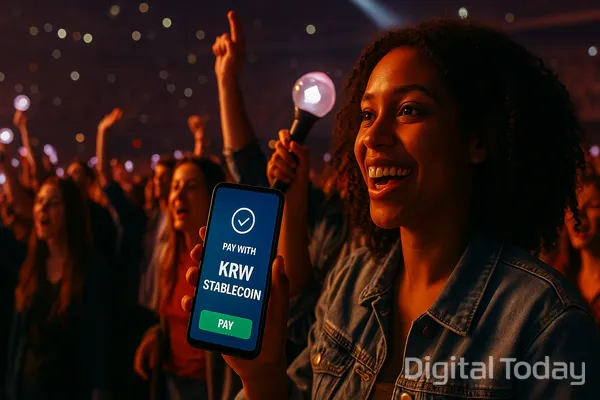
Korean content has evolved into a core driver of South Korea’s export economy by leveraging global fanbases. The K-content industry constructs multi-layered revenue models across all genres—including films, dramas, games, music, webtoons, and live performances—by utilizing fan-driven consumer culture. According to the 2024 Hallyu Ecosystem Research Report published by the Korea International Cultural Exchange Center (KOFICE), total exports driven by Hallyu last year amounted to approximately 21 trillion won, representing a 90.36 million won increase from the previous year. The expansion of K-content such as games, music, and films fueled an increase in consumer goods exports, acting as a catalyst. The production effect generated by Hallyu reached 37.6195 trillion won, a 10.7% rise compared to 2023. Global fanbases of K-content possess immense economic impact. HYBE’s subsidiaries hosted various themed merchandise events and experiential showroom pop-ups in Asia, North America, and Latin America during the first half of this year, attracting 630,000 fans. It is estimated that if such K-content platforms develop their own stablecoin ecosystems, they could attract over 50 million global users immediately. Won-based stablecoins are gaining attention as key tools to revolutionize the global trading environment for K-content. The entertainment industry expects to resolve issues such as exchange costs, fee burdens, and payment delays by spreading fan experience-centered consumption methods—such as merchandise, NFTs, and membership services—globally through stablecoins. Specifically, products like limited content, discounts, exclusive merchandise, and live streaming access reserved for users of won-based stablecoins can be developed for diverse applications. Overseas fans are expected to see significant convenience improvements as they can make payments without currency conversion. Additionally, a model is proposed to tokenize content such as copyrights, OSTs, unreleased videos, and webtoon episodes using non-fungible tokens (NFTs) and sell them to fans or investors. Another advantage is the ability to automate revenue distribution among participants such as singers, composers, and lyricists via smart contracts. Pilot projects by companies are already underway. Hexapay Financial, a comprehensive payment company, is advancing the use of won-based stablecoins through its K-culture platform “KSnap,” planning to reward KSnap members with won-based stablecoins for content consumption activities. NH Nonghyup Bank collaborated with fintech company Aton and the music copyright trading platform MusicCow on a pilot project for overseas payments and settlements using K-pop copyright-based tokenized securities (STOs) backed by won-based stablecoins. This aims to reduce exchange rate fluctuations and overseas remittance fees when overseas fans trade domestic K-pop music copyright tokens on a blockchain-based ledger. Wemade, a blockchain game company, is expanding its digital content payment ecosystem—encompassing games and NFTs—centered around its own public blockchain, Wemix 3.0, and is also conducting PoCs for won-based stablecoins. The government is advancing policies to strengthen the global spread of K-content. The Ministry of Culture, Sports and Tourism and the Korea Content Agency hosted the 2025 K-Expo from September 28 to 30 in Madrid, Spain, with another event scheduled for November in Dubai, United Arab Emirates. This comprehensive exhibition showcases various sectors of the Hallyu industry, including music, dramas, games, webtoons, food, cosmetics, and tourism, serving as a platform to promote the simultaneous export of high-quality K-content and related industrial consumer goods and services overseas.
발행·편집 책임: 국기봉 · KPOP Signal editorialThis article was written with AI from verified source material and passed automated checks before publication. It may contain factual errors. AI disclosure · Request a correction
Comments (0)
No comments yet — be the first to start the conversation.