Virtual Idols Rising to Mainstream Status, Reshaping the K-POP Market with Unreal Engine Technology
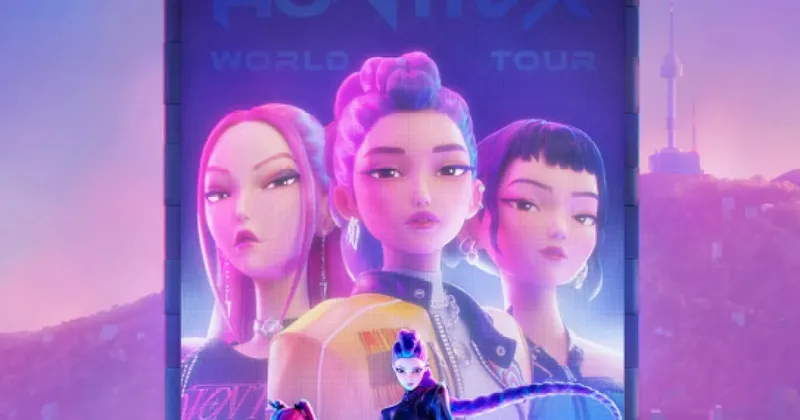
Virtual idols created using AI and Unreal Engine technology are emerging as a mainstream force in the K-POP market. This unprecedented phenomenon sees virtual artists dominating real-world music charts and building independent fanbases, while major entertainment companies are making substantial investments to establish new music industry ecosystems. The virtual groups from Netflix’s animated film “KPOP Demon Hunters” are driving this trend. Despite being entirely fictional artists, HUNTR/X and Lion Boyz swept global music charts. HUNTR/X’s “Golden” topped both the U.S. Billboard “Global 200” and “Global Excl. U.S.” charts, marking the first time a virtual artist has reached the summit of Billboard’s global charts. Lion Boyz’s “Your Idol” and “Soda Pop” also reached third and sixth place on the Global 200 chart respectively. A total of eight songs from the film’s soundtrack entered the Billboard Hot 100 chart at the same time, with the soundtrack album reaching third place on the Billboard 200 albums chart. In South Korea, the virtual idol group PLAVE surpassed real artists to top domestic music streaming rankings. Created using Unreal Engine, PLAVE delivers high-resolution 3D graphics in music videos, highly realistic character performances, as well as live broadcasts, YouTube variety shows, and music releases leveraging Unreal Engine’s real-time technology. The engine’s real-time rendering capability allows scenes to be generated and visualized instantly as viewed by users, enabling real-time updates to stage lighting, backgrounds, and characters’ expressions and movements. PLAVE not only topped various domestic music platform charts but also reached the top of Japan’s Oricon chart. Major agencies including SM Entertainment and HYBE are accelerating their entry into the virtual idol market. SM officially debuted NAVIS: as part of the aespa universe in September last year and plans to release a new song titled “Sensitive” next month. SM’s strategy involves expanding its IP universe beyond music activities through webtoons, games, and brand collaborations, with plans for partnerships via an MOU with MBC that could include appearances on “Show! Music Core.” HYBE’s subsidiary Supertone introduced the virtual idol Syndi[e]it, which operates in the fictional world of “Nancyland,” where “voice holds the power to move the world.” Supertone’s core technology is the real-time AI voice conversion tool “Supertone Shift,” which enables the creation of vocals aligned with creative intentions and adjusts voice tones according to album concepts to develop unique musical styles and identities. Virtual idols have already proven their market viability through early pioneers such as Unreal Engine’s first-generation artists APOKI and MAVE:. APOKI was named one of the world’s Top 5 VR social influencers by U.S. VR company HTC VIVE and was selected as the best K-virtual artist by the U.S. virtual influencer information site VirtualHumans. MAVE: made her debut stage on “Show! Music Core” in 2023, achieving 18 million views for her music video and 3 million views for her debut live performance video within just one month of her debut. Virtual idols are also evolving by extending real artists into virtual worlds. Actor Cha Eunwoo’s first VR concert, “Cha Eunwoo VR Concert: Memories,” utilized 12K hyper-realistic filming, AI-based resolution enhancement technology, and real-time synthesis and VFX powered by Unreal Engine to create an immersive experience that made it feel as though Cha Eunwoo were standing right in front of the audience. Stage sets, lighting, and camera work were all digitally implemented, transforming fans from mere spectators into active “participants” in the performance. G-Dragon’s digital media art exhibition, “G-DRAGON Media Exhibition: Übermensch,” offered an immersive experience through CG created using Unreal Engine, giving viewers the sensation of being in the same space as him. Virtual idols differ significantly from real idols in terms of content productivity and risk management. Unlike the traditional system, which requires high physical exertion for training, debut, and tours, virtual idols are free from issues related to military service, health, and privacy, allowing for stable content delivery. Combined with real-time streaming platforms, they also exhibit high efficiency in maintaining and expanding fanbases. Cultural critic Park Song-ah commented, “Virtual idols can gain popularity because they touch people’s emotions through two-way communication with fans. Although the language differs, the potential for these worlds to succeed is endless.” She added, “The key lies in using emotion algorithms and narratives to evoke growth and empathy, and ‘KPOP Demon Hunters’ is a great example that reflects these elements well.” However, experts point out that the virtual idol industry faces structural challenges such as heavy reliance on advanced technology, maintaining character identity, and content overload. High production costs and insufficient storytelling may lead to fan loss, requiring both long-term strategies and technical stability. Industry insiders predict that this market will move toward IP competition in the future, with new characters based on various platforms continuing to emerge.
발행·편집 책임: 국기봉 · KPOP Signal editorialThis article was written with AI from verified source material and passed automated checks before publication. It may contain factual errors. AI disclosure · Request a correction
Comments (0)
No comments yet — be the first to start the conversation.