Spotify Raises K-pop Royalties Threefold; Streaming of “K-Pop ON” Playlist Surges 470 Times
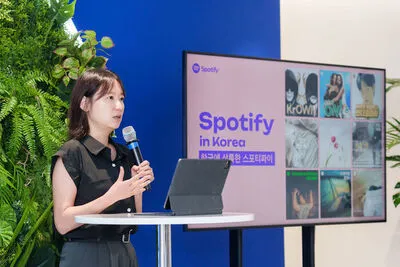
Spotify, the world’s largest music streaming platform, is strengthening its partnership with Korean artists. Park Jung-ju, head of Spotify’s Music team, stated that royalties paid to Korean artists in 2024 increased by 12% compared to the previous year, representing a more than threefold rise from 2019 levels. This trend demonstrates a significant shift in the status of Korean artists within the global music ecosystem. According to Spotify’s “LOUD & CLEAR” reports published since 2021, royalties distributed to the global music industry last year totaled $10 billion (approximately 13.78 trillion won in South Korean currency). Among these, music in Korean was the most streamed among non-English languages. Strategic use of K-pop playlists played a key role in helping Korean music reach worldwide audiences. Launched in 2014, the “K-Pop ON!” playlist has served as a major channel for global expansion, increasing K-pop streaming numbers by over 470 times over a decade. It drove K-pop’s growth by achieving average annual growth rates of 128% in Southeast Asia, 90% in the United States, and 98% in regions outside Asia. Last year alone, Korean artists’ music was streamed over 2 billion times on Spotify. Park emphasized that Spotify has focused over the past decade on creating a system where artists receive fair compensation amid evolving trends in the music industry, adding that Korean artists are at the center of these changes. However, Spotify’s attention extends beyond just “K-pop.” It also supports Korean artists in various genres such as indie, hip-hop, and R&B to gain a voice on the global stage. HANRORO, a Z-generation singer-songwriter, was selected as a new artist on Spotify’s “RADAR Korea” program. Hip-hop artist Lil Moshipit (Lee Hwi-min) released the track “Ugly” through Spotify’s “Spotify Singles” project alongside Paul Blanco and Okayson, resulting in a more than 81% increase in Lil Moshipit’s monthly listener count after the single’s release. Park explained that Spotify aims to be more than just a music distribution platform—it seeks to act as a cultural partner that enhances artists’ visibility and expands their fanbases, enabling artists to build long-term careers rather than relying on one-off successes. Spotify strategically manages genre-specific playlists to provide emerging artists with greater exposure opportunities. Lil Moshipit cited “Soultronic” as his favorite playlist on Spotify, stating that this genre, which combines soul music with electronic elements, aligns with his musical style, and that Spotify’s approach to offering relevant recommendations greatly inspires him. The platform’s evolution is also reflected in its user experience. Park said that Spotify’s biggest advantage lies in its “experience”—offering personalized music as a foundation while using various activities to connect artists with fans and extend their time on the platform. This includes hosting interactive pop-ups with popular groups like SEVENTEEN and ENHYPEN, as well as continuously expanding “Listening Parties” that allow fans and artists to communicate in real time. These efforts have contributed to changing Spotify’s position in South Korea. Although many predicted it would be at a disadvantage compared to local platforms and YouTube Music when it entered the domestic market in 2021, its monthly active users surged after introducing a free ad-supported plan in 2023. As of May this year, the app had 3.59 million users, the highest ever recorded, allowing it to overtake Genie Music and Flo and become the third-largest music streaming platform in the country. Spotify has also launched a new series of K-pop performance videos. Starting with the successful release of ENHYPEN’s “Loose” (Korean version) choreography videos, the series recently featured TWS’s “Freestyle” performance. Premium subscribers can access these videos in 96 countries, offering opportunities to get closer to their favorite artists through live vocals and choreography. Park added that while streaming technology remains unchanged, the ways artists and fans connect continue to evolve, and Spotify will keep working to ensure that Korean artists across various genres can reach more listeners.
발행·편집 책임: 국기봉 · KPOP Signal editorialThis article was written with AI from verified source material and passed automated checks before publication. It may contain factual errors. AI disclosure · Request a correction
Comments (0)
No comments yet — be the first to start the conversation.