Netflix’s “KPop Demon Hunters” Shows Global Harmony Between Korean Musok Culture and K-POP
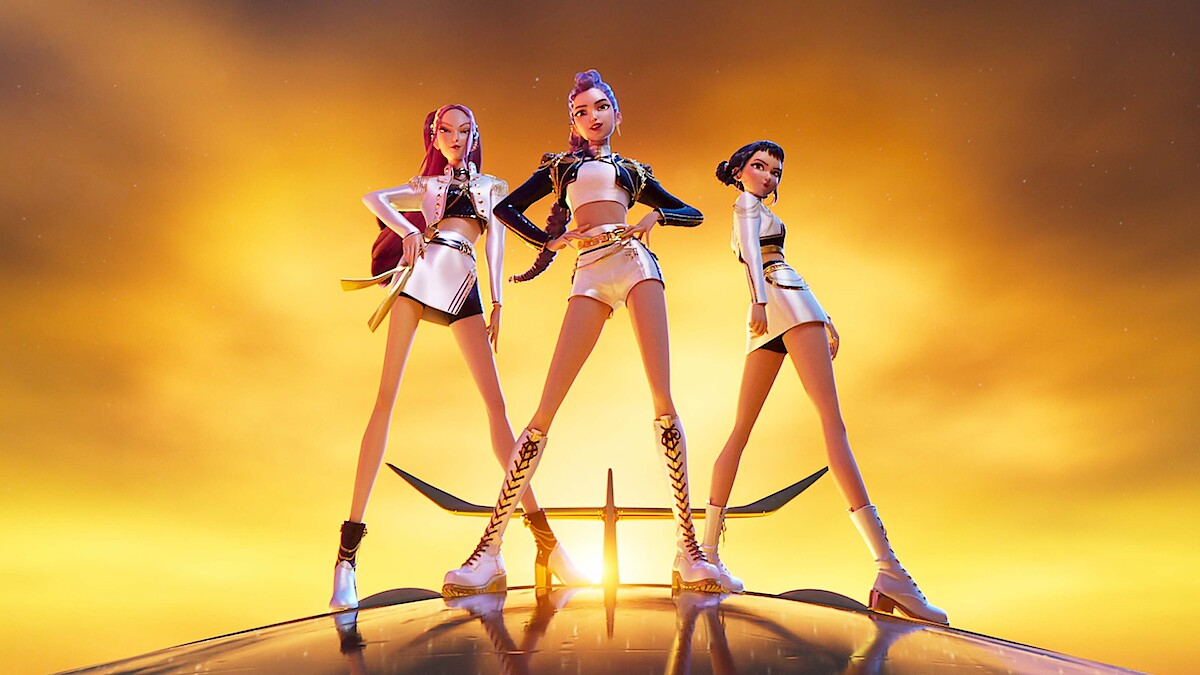
Netflix’s animated series “KPop Demon Hunters” has gained worldwide popularity by demonstrating the global harmony between K-POP and Korean culture. The series was created by Canadian-Korean director Maggie Kang and her production team, who visited Korea in person to experience its traditional cultures firsthand. “KPop Demon Hunters” is an action fantasy animation featuring a K-POP girl group named HUNTR/X as hidden heroes who protect the world behind the dazzling stages of music performances. Director Maggie Kang explained, “I wanted this work to feel as Korean as possible, so I tried to incorporate Korean elements into every design,” adding that “a great many Korean staff members contributed to its creation.” During production, the director and 10 team members traveled to Korea to gather ideas, exploring places such as Bukchon, Myeongdong, and the Folk Village. By observing and experiencing Hanok houses, Korean cuisine, and street scenes, the Korean essence was meticulously integrated into the series. Even subtle details like real locations like Namsan Tower and Bukchon, as well as specific foods and daily habits, were depicted in a realistic manner that would immediately be recognizable to Koreans. Despite moving to Canada at the age of five, Director Kang spent all her elementary school summer vacations in Korea. She said, “I grew up playing with my cousins, watching TV, and listening to music, which gave me extensive exposure to Korean pop culture. The details in the film also stem from my childhood experiences.” The series’ unique concept was inspired by Korean traditional Musok beliefs. The director explained, “Guks, which involve using music and dance to drive away evil spirits, seemed a perfect fit for the film’s theme. In a way, I even thought of guks as the earliest form of K-POP concert.” Various elements from Korean Musok beliefs appear in the film, including Jeoseungsaja (spirit messengers), dogebi (goblins), tiger ghosts, and Dangsan trees. Composing music for this K-POP musical animation proved challenging. The director recalled, “The difficulty lay in the fact that no one had ever created a musical film using K-POP before. The composers went through 7 to 8 revisions to finalize the music.” Many composers, including Teddy from The Black Label, participated in the music production, with overseas artists such as ZENA Andrew, who has composed songs for BTS multiple times, also contributing. TWICE also took part in creating the original soundtrack. The director said, “Our goal was to create tracks that would be recognized as true K-POP even if released immediately. That’s why collaborating with Korean labels was crucial, and that’s how we ended up working with The Black Label.” Korean actors provided voice performances. Ahn Hyo-seop voiced Jin-woo, the leader of the evil idol group Saja Boys and the male protagonist, in English, while Lee Byung-hun portrayed the main villain, Gwi-ma. Director Kang explained the casting decision by saying, “When I heard Ahn Hyo-seop speaking perfect English on the phone, I knew right away it was Jin-woo.” The characters of HUNTR/X and Saja Boys were not based on any specific K-POP group. She stated, “We didn’t reference any particular group or member. They were created under the influence of all K-POP groups and their members.” A notable scene in the film shows Saja Boys performing group dances in “Jeoseungsaja costumes” featuring caps and robes. Social media is filled with comments from international viewers asking what Jeoseungsaja are and what kind of hats Saja Boys wear. Not only Koreans but also foreigners are enthusiastic about these elements of Korean traditional culture. Director Kang emphasized the significance of the series by saying, “Just like K-POP or K-beauty, Americans become excited whenever something has ‘K’ in front of it. Even though this is a global content piece created in English, we wanted to include everything about Korea.”
발행·편집 책임: 국기봉 · KPOP Signal editorialThis article was written with AI from verified source material and passed automated checks before publication. It may contain factual errors. AI disclosure · Request a correction
Comments (0)
No comments yet — be the first to start the conversation.