Netflix’s “K-Pop Demon Hunters” to Debut Globally on June 20 – Produced by Sony Pictures Animation
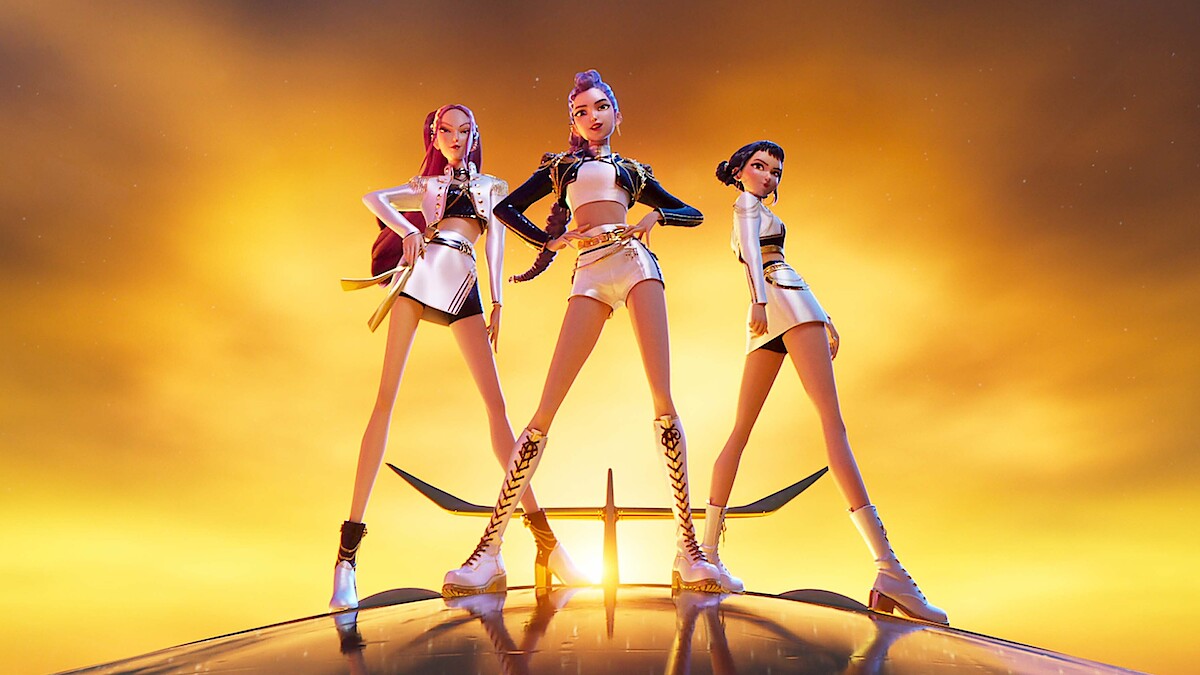
Netflix has announced that the music-driven action animated film “K-Pop Demon Hunters,” produced by Sony Pictures Animation (SPA), will be released simultaneously in over 190 countries worldwide on June 20. The story is set in a dual world where members of globally popular K-pop girl groups hunt demons outside of their stage performances. The plot is described as follows: “When they aren't selling out stadiums, Kpop superstars Rumi, Mira and Zoey use their secret identities as badass demon hunters to protect their fans from an ever-present supernatural threat. Together, they must face their biggest enemy yet – an irresistible rival boy band of demons in disguise.” The cast features a star-studded lineup. Arden Cho voices the lead K-pop girl group member Rumi, May Hong plays Mira, and Ji-young Yoo takes on the role of Zoey. Actor Ahn Hyo-seop was cast as Jinu, the leader of the rival boy group, delivering all of his lines in English. Other Hollywood celebrities participating include Yunjin Kim, Daniel Dae Kim, Byung Hun Lee, Joel Kim Booster, Ken Jeong, and Liza Koshy. In a statement, Ahn Hyo-seop said, “I still remember the excitement I felt when I first read the script for KPop Demon Hunters. Playing the character Jinu gave me the chance to explore a new way of working. I'm incredibly grateful to directors Maggie Kang, Chris Appelhans, and the amazing cast and crew who supported me throughout the process.” He handled the entire English dialogue, pursuing a sophisticated level of performance that went beyond simple acting by conveying subtle emotional nuances through voice alone. The music team is equally impressive. The original songs and soundtrack were composed and produced by Teddy Park, Danny Chung, Ido, Vince, Kush, and Dominsuk from TheBlackLabel. Vocal performances were contributed by Ejae, Rei Ami, Andrew Choi, Danny Chung, Kevin Woo, Samuil Lee, Neckwav, as well as Jeongyeon, Jihyo, and Chaeyoung from TWICE. Director Maggie Kang stated in a statement, “I have been a fan of these incredible artists and their work for many years, so it's a dream come true to have original songs written and produced for our film by legendary talent such as TheBlackLabel. I also couldn't be more thrilled about our collaboration with Jeongyeon, Jihyo and Chaeyoung of Twice. It really legitimizes our film and songs in the K-pop world.” Arden Cho added, “K-Pop Demon Hunters is about so much more than just K-pop. It's really about culture and identity, and who you are and your place in the world. For me, it's so meaningful to get to be a part of this movie and play Rumi, and I wish I had something like this growing up.” May Hong, who voices Mira, expressed her excitement by saying, “When I read for Mira, I really felt like the filmmakers had written an alternate version of me. It's surreal to go from shouting in a recording studio to seeing the film come together, from the visual style to the music and action sequences.” Ji-young Yoo, portraying Zoey, described the character’s appeal by saying, “When I watched KPop Demon Hunters for the first time, it brought to mind all the female action heroes I wanted to be as a kid. The film is about these women who are not afraid to embrace their beauty and their gentleness and their kindness, but they also kick butt.” Co-director Chris Appelhans emphasized the diversity of the voice cast by saying, “We have an amazing voice cast, and the range of their performances is what gives the film such an original tone. Byung Hun Lee and Ahn Hyo-seop bring authentic K-drama emotion, while Arden, May and Ji-young blend the charisma of legit K-pop stars with the vulnerability and comedy of real young women juggling a dual life like no other.” This film marks Sony Pictures Animation’s first feature-length animated release since “Spider-Man: Across the Spider-Verse” in 2023. It was co-directed by Korean-American director Maggie Kang and Chris Appelhans, known for “Wish Dragon.” Industry critics have described it as a symbolic example that illustrates “K-ification of global content” rather than “globalization of K-content.” This means it provides concrete proof of Korean culture’s influence at a time when Asian creators, Korean actors, and K-pop as a cultural asset are at the center of global popular culture.
발행·편집 책임: 국기봉 · KPOP Signal editorialThis article was written with AI from verified source material and passed automated checks before publication. It may contain factual errors. AI disclosure · Request a correction
Comments (0)
No comments yet — be the first to start the conversation.