KPop Demon Hunters, Featuring Korean Traditional Culture, Dominates Netflix’s Global Charts
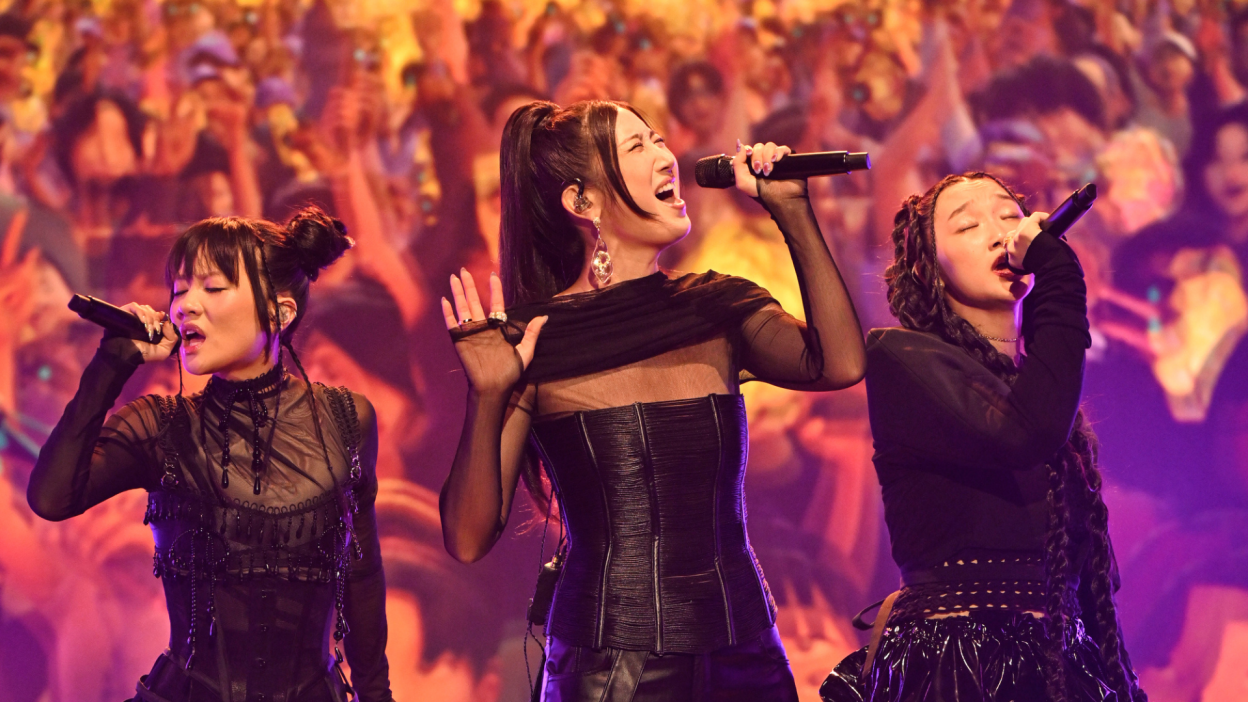
Netflix’s original animation “KPop Demon Hunters” is capturing attention worldwide. Since its release on June 20, it has topped Netflix’s movie charts in over 40 countries. In the English-language film category, it recorded 24.2 million views during the second week of last month (July 7–13), securing first place. This figure surpasses even “Squid Game 3,” which had 15.9 million views during the same period, as well as all non-English films and TV shows in both English and non-English categories. The total viewing time for this period reached 40.4 million hours. It further exceeded the 22.7 million views it achieved in the previous week (June 30–July 6), continuing its upward trend. Starting as the second-highest-performing English-language film with 9.2 million views in the third week of June, it has remained in the top 10 for four consecutive weeks, holding positions one or two. This K-pop themed work presents a unique universe centered around K-pop girl group HUNTR/X, who protect the human world from evil spirits, and their rival group Lion Boys. Before production began, the director and crew visited Korea to research and incorporate all real-world elements of K-pop, including stage costumes, makeup, cityscapes, and practice rooms. On the American film review site Rotten Tomatoes, it received the highest rating among all Netflix films released this year. It was praised by the outlet as offering an attractive, humorous, and original world. The same outlets predicted that the songs included in the film would be nominated for the Academy Awards’ Best Original Song category next year. Teddy, the producer for BLACKPINK, contributed to the music production, while TWICE members Jihyo, Jeongyeon, and Chaeyoung sang “Take Down” performed by HUNTR/X in the series. Canadian-Korean director Maggie Kang said, “We really wanted to immerse the world in K-pop. At the same time, we wanted to expose people to the Korean language as well.” K-pop’s ability to expand this way stems from its evolution beyond just “music” to include a full “universe.” From stage concepts and album narratives to member personalities and interactions with fans, everything is intricately connected to form a single “narrative content,” giving it a highly advantageous structure for growth as an IP.
발행·편집 책임: 국기봉 · KPOP Signal editorialThis article was written with AI from verified source material and passed automated checks before publication. It may contain factual errors. AI disclosure · Request a correction
Comments (0)
No comments yet — be the first to start the conversation.