'KPop Demon Hunters': A Modern Fantasy Harnessing the Strengths of Fiction to Spark a Global Cultural Trend
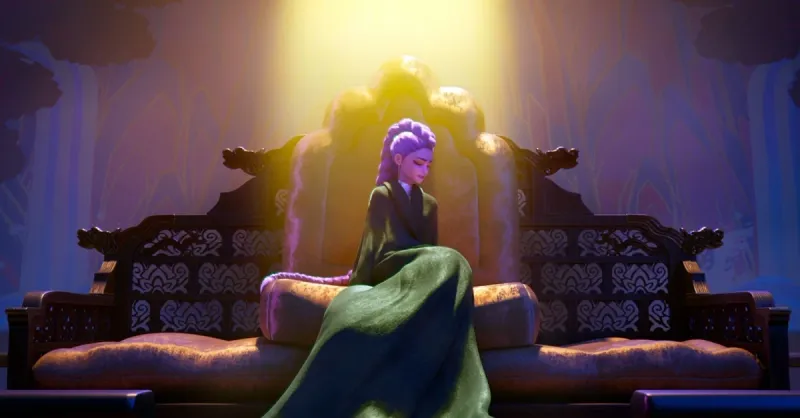
'KPop Demon Hunters' has exerted a wide-ranging cultural impact that goes beyond mere entertainment. This work, a fiction piece that modernizes the characteristics of classic tales, has gained worldwide popularity across all religions. With one of Netflix’s highest viewing records, 'KPop Demon Hunters' has been compared by numerous critics to J.R.R. Tolkien’s 'The Lord of the Rings.' Just as Tolkien famously stated, "I hate all forms of allegory from the bottom of my heart," this work also allows for diverse interpretations through its "applicability" rather than being an allegory. Similar to how 'The Lord of the Rings' is universally loved by audiences from various religious backgrounds, 'KPop Demon Hunters' delivers profound human values without being confined to specific beliefs. The secret to its success lies in "no controversy." The K-pop industry is often notorious for fan conflicts, but 'KPop Demon Hunters' completely avoided such real-world tensions by creating a pure fictional group with no fanbase. According to Rolling Stone, the film and its soundtrack provided "pure K-pop without fan wars or label wars." The movie music, including background tracks, was composed by K-pop hitmakers such as IZ*ONE, Teddy Park, and ZENA Andrews, with HUNTR/X’s 'Golden' and SZA’s 'Soda Pop' reaching the top ranks of the Billboard Hot 100. Per streaming music analytics firm Luminate, as of early August, the film’s soundtrack accounted for "about 43 percent of all K-pop streaming in the United States," achieving equal success to that of all other K-pop artists combined. A senior official in the K-pop industry told Rolling Stone, "This level of success is unprecedented for a Netflix content piece. Most of the viewers discovered it through word of mouth, as there was almost no marketing at the time of the film’s release." The work also delves deeply into the experiences of multicultural Asian youth. The protagonist Rumi hides her half-demon identity, which becomes the core of her internal conflict. The demon Jinu says, "This means shame to her," and this psychological insight reflects the anxieties and fears of many viewers. The 2025 Seoul Hunter Festival held at Seoul Plaza is an example of the film’s global influence. Dance troupes from around the world, including the United States, Bulgaria, and Indonesia, performed high-energy choreography to the film’s synth soundtrack, while participants discussed various aspects of Korean culture. This demonstrates that the K-pop industry functions as Korea’s national soft power beyond being merely a music business. South Korean President Lee Jae-myung made K-culture the central theme during this APEC summit and announced plans to establish a new presidential advisory body to promote Korea’s cultural exports. Park Seok-jong, Minister of Defense Acquisition Program Administration of South Korea, mentioned that "K-culture can build trust in Korea and contribute to strengthening national defense," emphasizing how soft power enhances national security. The work has also received high praise from critics. It holds a 95 percent freshness rating on Rotten Tomatoes, with film critics praising its visuals, story, and message alike. One viewer noted, "I expect to see many HUNTR/X and SZA costumes on the streets after Halloween," highlighting the film’s impact on popular culture. Korean cultural elements such as the talismans worn by the characters (traditional Korean amulets) and the King of Death from Korean folk mythology are serving as means to introduce Korean culture to young people worldwide.
발행·편집 책임: 국기봉 · KPOP Signal editorialThis article was written with AI from verified source material and passed automated checks before publication. It may contain factual errors. AI disclosure · Request a correction
Comments (0)
No comments yet — be the first to start the conversation.