K-POP Tours Generate Record Profits; Efforts to Expand Domestic Performance Infrastructure Accelerate
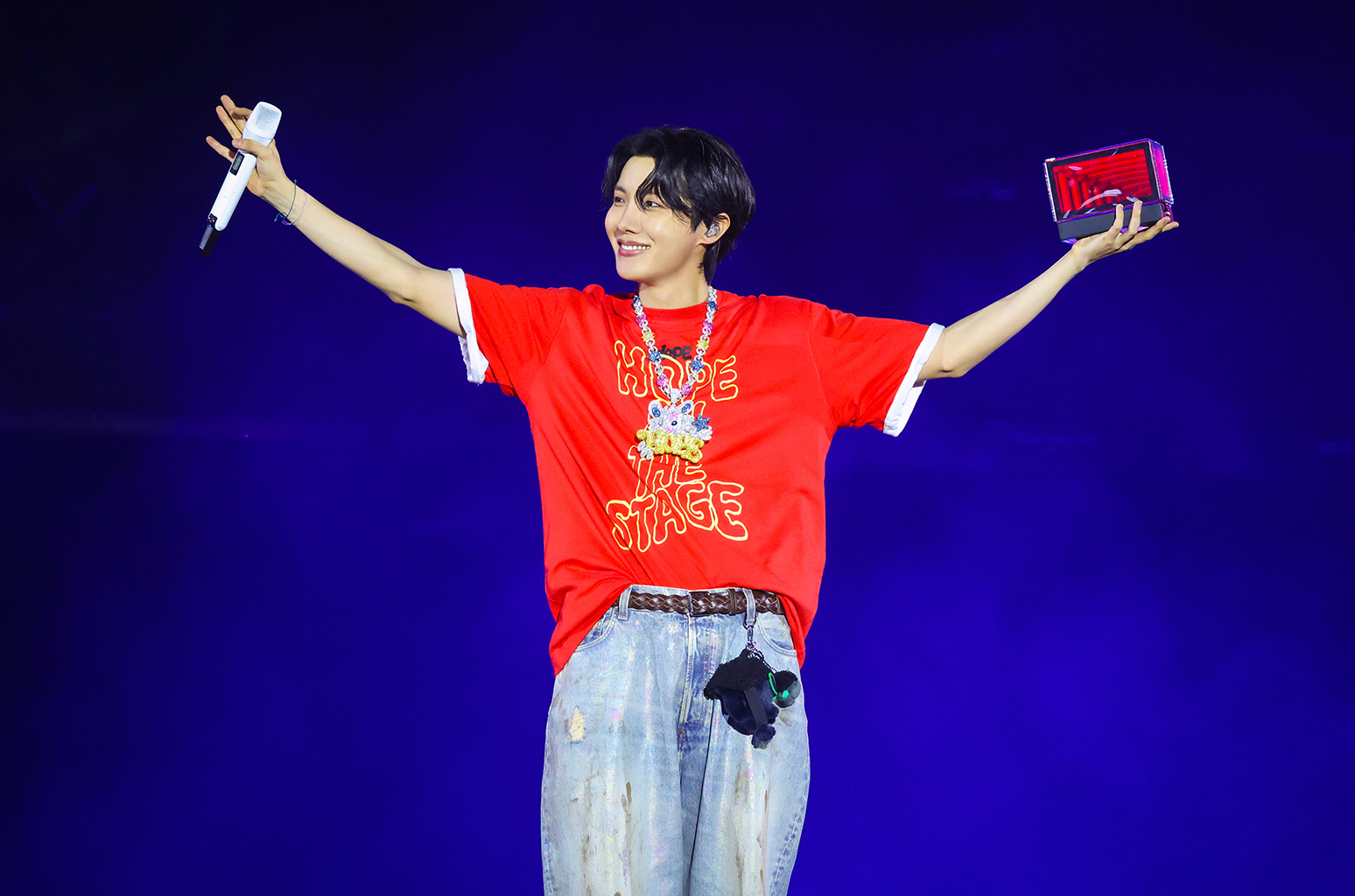
In 2025, the K-POP industry achieved its highest-ever earnings on the global stage. According to Billboard’s year-end box score rankings, K-POP artists demonstrated unprecedented ticket-selling power by selling out stadiums across Asia, Europe, and the Americas. Among the top 10 most profitable K-POP tours of the year, j-hope’s (BTS) “Hope on the Stage Tour” topped the list with earnings of $79.9 million (approximately 111.8 billion won). This tour, which included 33 performances and attracted over 500,000 attendees, spanned Asia and North America. BTS’s Maknae, Jin, ranked sixth with “#RUNSEOKJIN EP.TOUR,” generating $46.1 million (about 64.5 billion won) through 18 shows that drew 287,000 fans. ENHYPEN’s “Walk the Line World Tour” came in third with $76.1 million (roughly 106.5 billion won), reaching 556,000 attendees across 25 performances. ATEEZ’s “In Your Fantasy Tour” secured fourth place with $70 million (around 98 billion won), drawing 400,000 people to 28 shows in Europe and North America. TXT’s “ACT: TOMORROW” finished fifth with $64.3 million (approximately 90 billion won), accommodating 485,000 attendees across 39 performances—the most extensive schedule of the year. LE SSERAFIM’s “Easy Crazy Hot Tour” generated $34.1 million (about 47.7 billion won) with 27 shows, while aespa’s “Synk: Aexis Line” earned $18 million (roughly 25.2 billion won), drawing 138,000 attendees to 15 shows in North America and Europe. G-Dragon’s “Übermensch” recorded $27.1 million (about 37.9 billion won) despite only 9 limited performances in the United States, Sydney, and Paris, underscoring the enduring popularity of the BIGBANG Leader. Amid the booming global tour market, efforts to expand domestic performance infrastructure are also intensifying. The Jeju International Convention Center completed its second convention center (Jeju MICE multi-purpose complex) after 22 years. Completed on the 20th of this month, the facility will hold its official opening ceremony at the end of February 2026, featuring a “K-Culture Festival” K-POP concert as part of the event. Unlike the first convention center, this new structure is designed as an open layout without columns or fixed seating. Its single-story multi-purpose hall covers 4,728㎡—equivalent to two-thirds the size of a football field—and can host international conferences, exhibitions, and performances. It has a capacity of 6,000 people for conferences, up to 2,000 for banquets, and space for up to 300 exhibition booths. A total of 88 billion won was invested, including 44.7 billion won from local funds. The government is also actively promoting the development of performance facilities. The Ministry of Culture, Sports, and Tourism has proposed a national infrastructure roadmap to address the chronic issue of “insufficient performance venues” in the K-POP industry. Minister Choe Hwiyoung stated during a presidential policy briefing on the 16th that 12 billion won will be allocated in 2026 to modernize audio and lighting systems at sports facilities located in rural areas. Currently, in Seoul, KSPO Dome is the only venue capable of holding over 10,000 attendees (with 15,000 seats). Jamsil Olympic Stadium’s main stadium (50,000 seats) and auxiliary stadium (25,000 seats) are under renovation, while Gochek Sky Dome (20,000 seats) is almost always unavailable due to baseball season schedules. As a result, major domestic agencies have had to reduce the scale or change the dates of Seoul shows, which serve as the starting point for world tours. The government is pursuing medium- to long-term plans to build arenas and multi-purpose domes with 50,000 seats. Minister Choe explained, “Various local governments are already starting arena construction, such as the Seoul Arena (with 18,000 seats) and the Goyang Arena (with 20,000 seats). Several arenas are expected to be completed by around 2027 or 2028.” Additionally, the government plans to invest approximately 800 million won next year to initiate research for dome stadium construction. Meanwhile, a performance industry insider expressed hope that “building ‘homes’ suitable for K-POP’s status is a national task that can no longer be delayed” and added, “I expect these comprehensive support measures to resolve the persistent issue of venue shortages and transform Korea into a hub for global performance culture.”
발행·편집 책임: 국기봉 · KPOP Signal editorialThis article was written with AI from verified source material and passed automated checks before publication. It may contain factual errors. AI disclosure · Request a correction
Comments (0)
No comments yet — be the first to start the conversation.