K-POP’s 470-Fold Growth Over 10 Years as It Becomes the Heart of Global Youth Culture
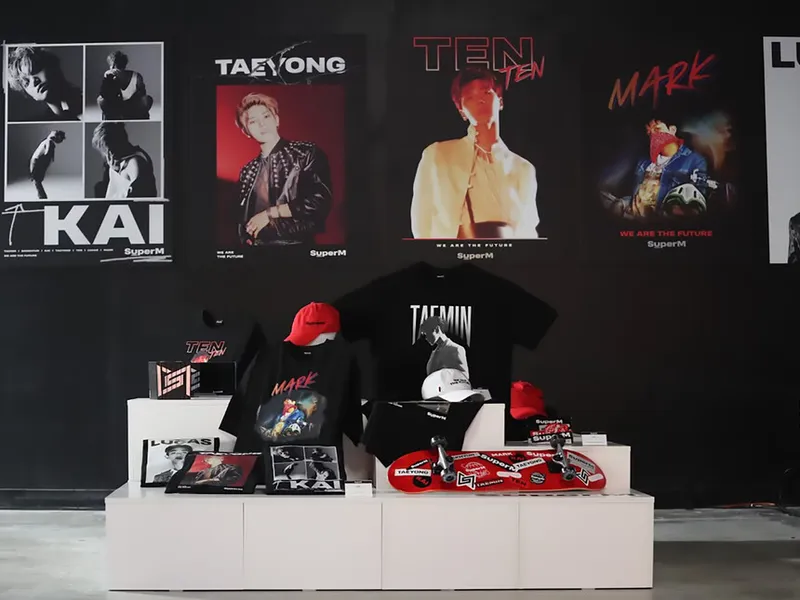
K-POP is reshaping the global music market. According to Spotify, K-POP streaming increased by 470 times over the past 10 years from 2014 to 2024. This signifies that it is not merely driving growth within a music genre but also redefining youth culture and identity worldwide. Streaming figures clearly illustrate K-POP’s explosive expansion. Last year, global music fans streamed Korean artists’ content on Spotify over 2 billion times for the first time. The total playback time of Korean music on Spotify that year reached 9.7 million hours. Notably, among the 17 languages of artists who generated annual revenues of over $1 million on Spotify, Korean was the most frequently played non-English language. Royalty income from Korean songs on Spotify has grown by more than three times compared to 2018. Regionally, K-POP streaming grew at an average annual rate of 128% in Southeast Asia, 90% in the United States, and 98% outside Asia. By country, the United States, Indonesia, Brazil, the Philippines, and Mexico had the highest levels of Korean music playback. Spotify analyzed that its “K-Pop On” playlist, launched in 2014, has connected K-POP fans around the world with K-POP content, serving as a foundation for sustained growth. K-POP’s influence extends beyond music to overall global youth culture. The center of gravity of once-Western-dominated global pop culture has shifted to Seoul. The new aesthetics brought by K-POP stars have turned Korean street fashion into a worldwide trend, tteokbokki into a global food item, and the Korean language into one that many wish to learn. These changes directly impact youth identity formation across generations. K-POP’s reinterpretation of gender norms is also a key aspect of its global influence. The act of K-POP male idols wearing makeup, experimenting with fashion, and showing emotional vulnerability is now seen not as weakness but as “soft masculinity,” helping young people worldwide break free from rigid gender role expectations. Especially for LGBTQ+ and non-binary fans, K-POP has become a space where identity can be expressed freely. The social influence of K-POP fandoms is also unique. K-POP fans are not merely music consumers. They translate lyrics, stream content to boost chart rankings, participate in online voting, and plant forests or launch charity campaigns using idol names. Organized through Twitter, TikTok, Instagram, and fan communities, these global fandoms have turned K-POP idols into global advocates for social justice. This indicates that K-POP functions not just as a music industry but as a cultural movement. K-POP’s influence has even reached the musical theater industry. It has become common to see former K-POP idol actors on Korean musical stages. From first-generation idols such as Kim Jun-su in “Aladdin” and Ok Ju-hyun in “Marie Curie” to Woo Yeon (U-Kwon) in “Contact,” Lee Seo-young (Hello Venus) in “The Red Garden,” Inseong (SF9) and Solbin (LABOUM) in “Even If This Love Disappears from the World Tonight,” Jin-ho (PENTAGON) in “Bear the Musical,” and Leo (VIXX) and Lee Chang-sub (BTOB) in “Memphis,” these artists dominate the stages. In “Love Comes with the Rain,” four idols—Dey (G.O.D), Hui (ASTRO), Jonghyun (BTS), and Jaehan (OMEGA X)—are currently performing. In particular, “Dream High” is a show musical centered on K-POP and performance, featuring a large cast including Se7en, Kim Dongjun (Empire Kids), Youngjae (GOT7), Jinjin (ASTRO), Jang Dongwoo (INFINITE), Kang Seung-sik (VICTON), Yoo Kwon (BLOCK B), Im Se-jun (VICTON), Kim Dong-hyun (Golden Child), Sunye (WONDER GIRLS), and Luna (f(x)). Relying on their established fandoms, these artists exert strong ticket-selling power, significantly impacting the success of musicals. Production companies are successfully entering domestic and overseas markets such as Southeast Asia by casting idols. K-POP itself has even become a theme for musicals. “Dream High” is based on a drama of the same name and unfolds the story centered around K-POP and performance. Lee Soo-man, the former CEO who founded SM, is preparing a jukebox musical focused on K-POP. The fact that a musical titled “K-Pop” has also been performed on Broadway shows that K-POP is recognized worldwide as an important theme in musicals. K-POP fandom culture has also deeply penetrated the musical theater industry. Fans actively consume specific stars by attending performances multiple times, often referred to as “Nth viewing” or “revolving door viewing.” The practice of producing and consuming merchandise (MD) popular in K-POP fandoms is also spreading among musical theater fans. This culture of fans creating and sharing their own merchandise further deepens their affection for musicals. However, some negative effects have been pointed out. The biggest concern is excessive reliance on certain idols. As the presence of K-POP idols becomes a key factor determining the success of a work, there may be a tendency to rely solely on an actor’s popularity rather than the quality of the performance itself. This could weaken the integrity of the musical industry in the long term and increase the burden on actors. Additionally, there are concerns that by relying on K-POP’s popularity, focus might shift too much toward flashy castings or visual effects at the expense of work quality, potentially leading to audience rejection. Nevertheless, K-POP’s global influence continues to expand. Spotify’s data and its impact across various cultural industries prove that K-POP is not just a music genre but a global cultural movement. The return of major groups like BTS and the continuous emergence of new artists suggest that K-POP is entering another stage of growth.
발행·편집 책임: 국기봉 · KPOP Signal editorialThis article was written with AI from verified source material and passed automated checks before publication. It may contain factual errors. AI disclosure · Request a correction
Comments (0)
No comments yet — be the first to start the conversation.