K-pop Redefined as Modern Art and Cultural Phenomenon Beyond Music
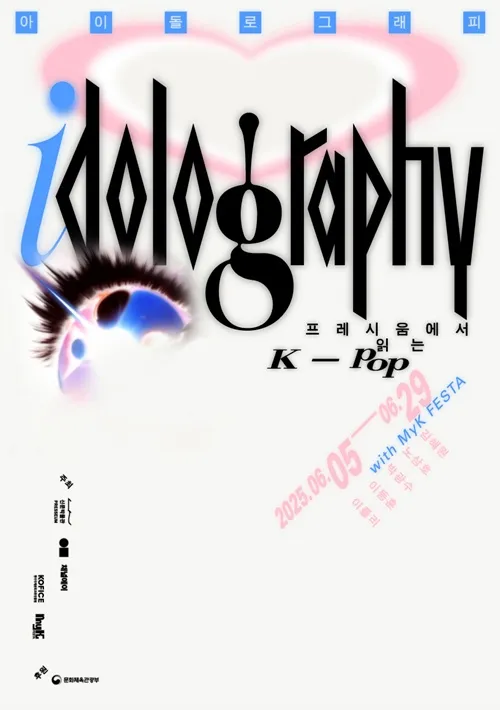
There is a growing trend of examining K-pop not merely as a musical genre but as a multifaceted element encompassing modern art, media, and broader cultural phenomena. The Newspaper Museum is exploring the cultural significance of K-pop through its summer special exhibition titled “Idolography: Reading K-POP with MyK FESTA” opening on June 5. The exhibition name “Idolography” combines “idol,” a symbol of popular culture, with the suffix “-graphy,” which refers to recording and visual techniques, reflecting the intention to analyze the K-pop phenomenon from various perspectives. Kim Tae-ryeong, director of the Newspaper Museum, stated that this exhibition will provide an opportunity to “read” K-pop, one of the best contemporary cultural contents, through the lenses of media archives and modern art. The exhibition is divided into four sections. The first section, “Reading K-pop through Media,” examines the interaction between K-pop and media using rare archival materials from Dong-A Ilbo and Dong-A Broadcasting held by the Newspaper Museum. The second section, “Reading K-pop through Modern Art,” features paintings, sculptures, videos, and installations created by five artists—Kim Hye-won, Noh Sang-ho, Park Gwang-soo, Lee Dong-hoon, and Lee Pli—who drew inspiration from popular culture or reinterpreted it, demonstrating that K-pop serves as a source for contemporary art while art can further enrich its meaning. The third section, “Idol Chronicles,” traces the lineage and characteristics of idol groups that represented different eras, from Kim Wan-seon in the 1980s to today’s fifth-generation idols. The final section, “The Idol Who Started It All,” looks back at the musical world and achievements of Jeong Hun-hee, the original Hallyu idol who debuted through Dong-A Broadcasting. In collaboration with Channel A’s “Close Friends Documentary: 4-Person Table,” Jeong Hun-hee, her husband Kim Tae-hwa, Insooni, Park Sang-min, and Park Gu-yoon discuss the past and present of K-pop. Artworks inspired by Jeong Hun-hee’s signature songs “Mist,” “In the Flower Field,” and “Desert Island” are displayed alongside a 34-minute audio recording from her appearance on Dong-A Broadcasting’s music program “Golden Stage” in 1972. Meanwhile, Martin Puchner, a professor of World Literature and Culture History at Harvard University, explores K-pop’s historical place in his book *Culture: The Story of Us, From Cave Art to K-Pop*. At a book launch event held on May 15 at the Beijing Times Art Museum, He Yanxiao, a postdoctoral researcher at the Institute for Advanced Study in Humanities and Social Sciences at Tsinghua University, gave a presentation titled “Appropriate Interest in K-pop within the American Academy.” Comparing late Roman theater culture with today’s K-pop-driven digital pop culture, he emphasized that K-pop represents “the pinnacle of popular culture that emerged alongside 20th-century photography technology” and is reshaping cultural values and imagination among youth worldwide. “Idolography,” held at the Newspaper Museum within Gwanghwamun Ilmin Museum until June 29, is sponsored by the Ministry of Culture, Sports and Tourism and jointly organized by the Newspaper Museum, Ilmin Museum, Channel A, and the Korea International Cultural Exchange Promotion Agency.
발행·편집 책임: 국기봉 · KPOP Signal editorialThis article was written with AI from verified source material and passed automated checks before publication. It may contain factual errors. AI disclosure · Request a correction
Comments (0)
No comments yet — be the first to start the conversation.