K-POP on the Grammy Stage: Questioning the Boundaries of Identity
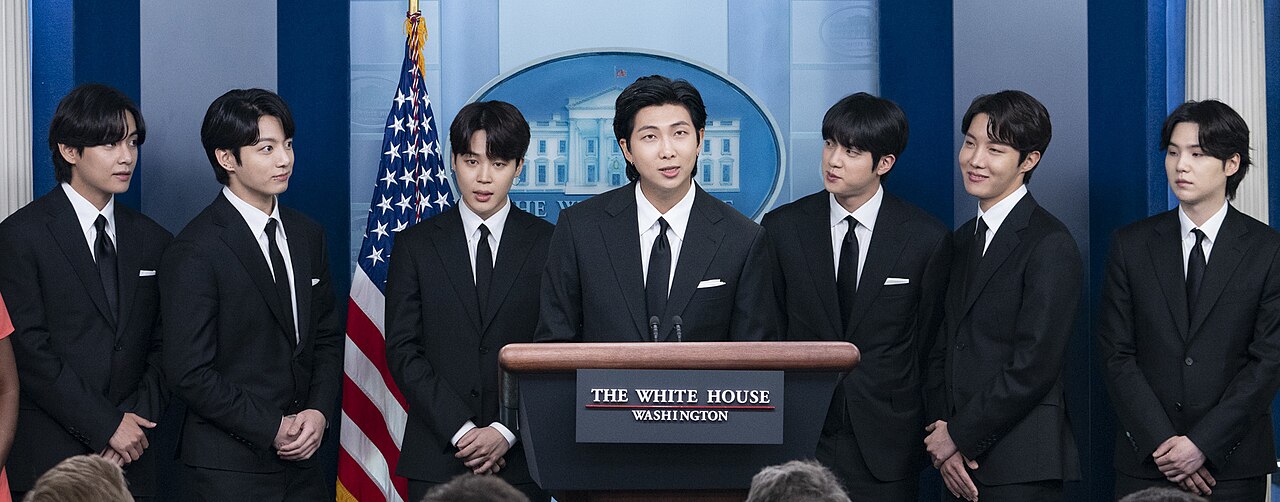
Photo The White House / Public domain — Wikimedia Commons
At the 68th Grammy Awards, K-POP’s influence continues to expand like never before, yet it simultaneously sparks fundamental questions about what exactly constitutes K-POP. With three K-POP-related nominations at this ceremony held at the Crypto.com Arena in Los Angeles, fan debates over genre boundaries have intensified.
The most highly anticipated nomination is Rosé’s “APT.” Performed alongside Bruno Mars, this track has been nominated for Song of the Year, Record of the Year, and Best Pop Duo/Group Performance. Notably, Rosé will become the first K-POP solo artist to perform live on a Grammy stage. Prior to this, Korean artists’ appearances at the Grammys were limited to group performances by BTS from 2020 to 2022.
“Golden” is competing in multiple categories as well. As the theme song for Netflix’s animated series “KPop Demon Hunters,” it has received nominations including Song of the Year. The fact that a song from a fictional K-POP band in an animation is competing directly with top global pop music signifies structural changes within the music industry.
The rookie girl group KATSEYE has also been nominated as part of the K-POP community, entering the Best New Artist category and helping to broaden K-POP’s reach. However, since KATSEYE does not sing in Korean, it has triggered discussions among fans regarding the “scope of K-POP.”
Music industry analysts are paying close attention to the evolution of the K-POP concept. This means that not only Korean idol groups but also cross-platform storytelling that combines music, animation, and global streaming platforms is now recognized as part of the K-POP category. Even though a win has not been guaranteed, their nominations in core Grammy categories such as Song of the Year, Record of the Year, and Best New Artist prove that K-content has transcended genre limitations.
Discussions about K-POP’s identity are an inevitable challenge as the genre grows. Music scholars define K-POP not merely as “pop sung by Koreans” but as a culture born from the convergence of Korean sentiment and creativity following U.S. military presence. It refers to a genre that, while influenced by worldwide trends, is reinterpreted through Korea’s unique musical systems and creativity. Against this backdrop, the boundaries of “K-POP” are likely to continue expanding.
발행·편집 책임: 국기봉 · KPOP Signal editorialThis article was written with AI from verified source material and passed automated checks before publication. It may contain factual errors. AI disclosure · Request a correction
Comments (0)
No comments yet — be the first to start the conversation.