K-Pop Idols as Demon Hunters? Netflix Animated Film “KPOP Demon Hunters” Ranks No. 1 in 41 Countries Worldwide
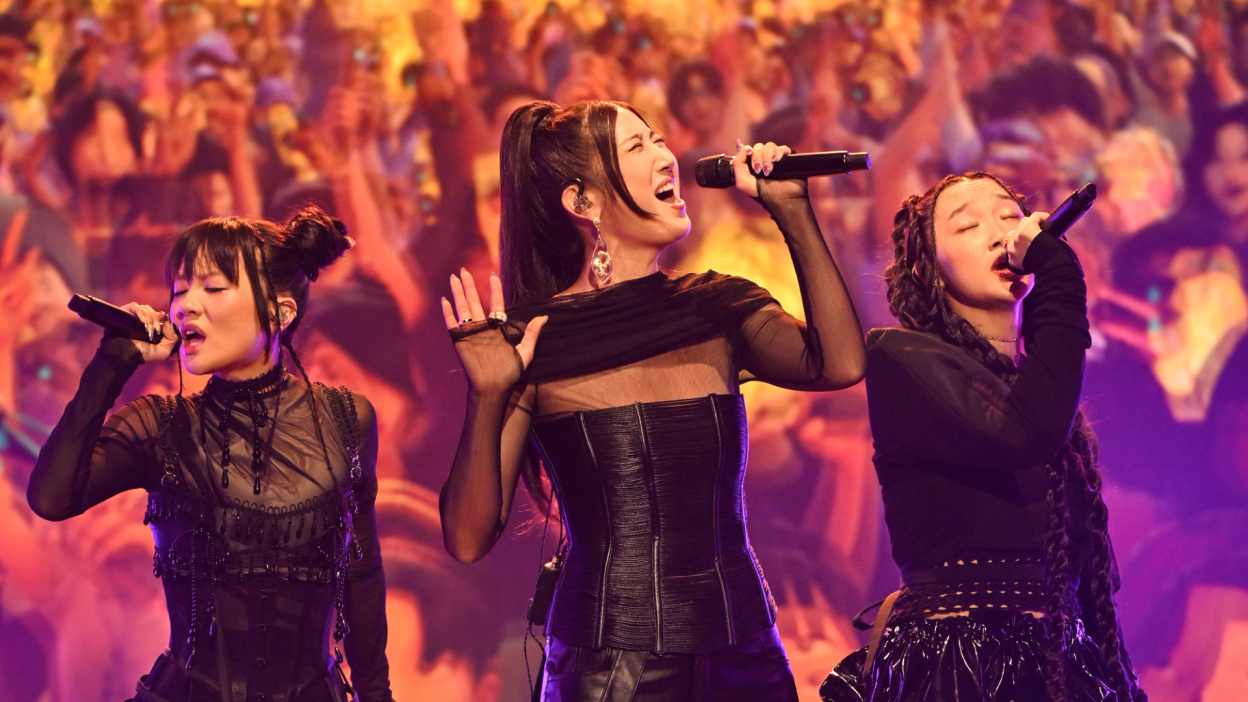
The animated film “KPOP Demon Hunters,” released on Netflix on the 20th, has gained massive global attention. According to data from OTT ranking site FlixPatrol, it reached the top spot in the global film rankings just three days after its release, securing first place in a total of 41 countries. It has received strong support across North America, Europe, Asia, and South America, including in the United States, the United Kingdom, Germany, France, Australia, Mexico, and Japan. The film features a unique concept in which a three-member K-pop girl group named HUNTR/X acts as world-famous idols on stage while serving as demon hunters who use music and dance to exorcise evil spirits behind the scenes. The process of using spiritual shields called “Honnun,” created through songs and emotions, to purify demons, combined with dazzling stage performances, conveys the message that music can save souls. Opposing them are the five-member boy group SAZA BOYZ, who are fallen angels sent by the demon king “Gwima” to weaken HUNTR/X. Co-directed by Canadian-Korean director Maggie Kang and Chris Applehanes, the film was produced by Sony Pictures Animation in the United States. Although it primarily uses English dialogue, it is filled with details that reflect Korean culture. It has achieved a Rotten Tomatoes critic rating of 96% and a audience rating of 91%, and its soundtrack also reached No. 1 on the U.S. iTunes album chart. Producers from The Black Label, such as Teddy, 24, and ido, contributed significantly to the film’s music, with tracks like HUNTR/X’s “Golden,” SAZA BOYZ’s “Soda Pop,” and “Your Idol” making it onto the iTunes single chart. Director Kang revealed that she and her team of 10 members visited Korea in person to conduct thorough research, exploring locations such as Bukchon, Myeongdong, and the Folk Village, in order to incorporate Korean elements into every aspect of the film’s design. She emphasized Korean identity so much that she even asked animators to ensure the characters’ mouth movements appeared as if they were speaking Korean while recording the English dialogue. Kang expressed her satisfaction by saying, “It was very meaningful to be able to share this experience with Korean cast members, as it is the first animated film set in modern Korea that explores Korean culture.” She added, “I feel proud of the power of Korean culture.” Many Korean actors contributed their voices to the film. Ahn Hyo-seop voiced Jin-woo, the leader of SAZA BOYZ, while Lee Byung-hun voiced the demon king Gwima in English. Kang explained that she cast Ahn Hyo-seop after seeing him in the Korean drama “Sanae-matseon” and recognizing his ability to deliver English perfectly as the ideal portrayal of Jin-woo. Regarding Lee Byung-hun, who was the first Korean actor to break into Hollywood, she said, “I have always admired him greatly, and it was an honor to work with him.” The character designs for the film were also created after careful consideration. Kang stated, “The most important thing when designing the three members of HUNTR/X was to ensure they all looked different.” She explained that she aimed for Joy’s smile shape to resemble a heart, Mira to appear tall and slender, and Rumi to have a classic and beautiful Korean appearance. To achieve this, she drew extensive inspiration from K-pop idols and Korean models, using model Ahn So-yeon as the basis for the fashion-forward character Mira. SAZA BOYZ was inspired by Korean groups such as TOMORROW X TOGETHER, BTS, Stray Kids, ATEEZ, BIGBANG, and MONSTA X, while Jin-woo’s design was based on Korean drama actors like Cha Eunwoo and Namjoo. The voices of HUNTR/X’s members were provided by Korean or Korean-American artists. Rumi was voiced by EJAE, Mira by REI AMI, and Joy by Audrey. The songs for SAZA BOYZ were performed by composer Andrew Choi, NEKWAVE from ZEROX, Danny Jung from The Black Label, Kevin from U-KISS, and samUIL Lee. Choreography was handled by K-pop choreographer Lee Jung and the crew Jam Republic, who emerged from Mnet’s “Street Woman Fighter 2.” TWICE’s Jeongyeon, Jihyo, and Chae-young also contributed to the soundtrack by singing the original song “Takedown.” “KPOP Demon Hunters” has attracted attention not only because it uses K-pop as a theme but also because it thoroughly incorporates the entire spectrum of Korean culture, from tradition to modernity. Elements of Korean shamanistic beliefs such as dorkaebi, tiger spirits, Dangsan trees, and gut appear in the film, and even minor details like the members’ clothing, food, and daily habits are depicted realistically in ways that would immediately be recognizable to Koreans. Kang said, “Gut, which involves using music and dance to defeat monsters, seemed perfectly suited to the film’s concept. In a way, I even thought of gut as the earliest form of K-pop concert.” She added, “I was worried about how Korean audiences would react, but their positive response relieved me. Through this film, I wanted to convey the message that although it is difficult to acknowledge and accept anxiety and fear, it is possible to strive to overcome them.” She further emphasized, “It might seem strange to tell a Korean story in English, but the fact that such a culturally authentic Korean film was produced by an American company is proof of the strong power of Korean culture. It is a testament to how far Korean culture has developed and the immense influence it holds, which fills me with great pride.”
발행·편집 책임: 국기봉 · KPOP Signal editorialThis article was written with AI from verified source material and passed automated checks before publication. It may contain factual errors. AI disclosure · Request a correction
Comments (0)
No comments yet — be the first to start the conversation.