K-POP Evolving into Virtual Idols and AI Agents: Technology Creating New Stars
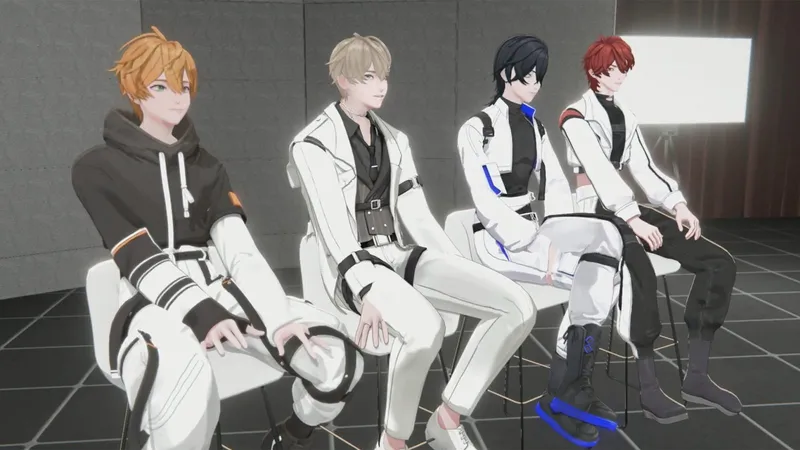
K-POP is now expanding beyond being merely a music industry by integrating advanced technology, giving rise to new types of stars. A variety of technological advancements, from virtual idols to AI music agents, are reshaping the future of K-POP. South Korea’s virtual idol group “Re:Revolution” has gained attention for using motion capture technology to allow real artists to perform as digital avatars in the metaverse. Jack, a member of Re:Revolution, dons a full-body suit in a motion capture studio in Seoul to convert his movements and voice into a digital character. He said, “When I was a K-POP idol trainee, I thought I would never be able to debut,” adding, “As a virtual idol, I no longer have worries about my appearance.” Artists who were once frustrated by the industry’s strict beauty standards and fierce competition are getting a second chance through virtual idols. Virtual idols, once confined to online subcultures, have now emerged as part of the mainstream music industry. Groups such as Plave and Isegye Idol have tens of thousands of fans on streaming platforms like YouTube, Soop, and CHZZK. They create content such as recreations of “Squid Game” episodes and Minecraft quests, offering close interactions with their fans. They are also achieving commercial success. In May, Isegye Idol sold out the Gocheok Sky Dome in Seoul, allowing approximately 16,500 fans to experience a performance where virtual and real worlds met through high-definition LED screens. Plave achieved milestones that were once reserved for human artists by embarking on an Asian tour. The technical foundations of virtual idols vary. Most groups use motion capture and real-time rendering technology, but groups like Mave are entirely artificially created using machine learning, deepfake, and 3D modeling techniques. Meanwhile, these artists face unique challenges stemming from their virtual activities. Despite identity protection measures, they are exposed to tryharding attempts and cyberbullying, and some experience loneliness between their digital personas and real-life lives. The trend of virtual idols is spreading internationally as well. “MEWLIVE,” a virtual idol group under Japan’s Bandai Namco, held its first event in Korea. Organized by Shopfanpic, the event took place from October 27 to 31 at AK Plaza in Hongdae, featuring mini holograms of MEWLIVE members, large hologram photos, and life-sized statues. Yamiyori Royro, a second-generation member of MEWLIVE, shared a Korean greeting for her fans: “Hello, I am a Japanese virtual YouTuber who streams games on YouTube and Twitch.” AI technology is also making deep inroads into the K-POP industry. “MUTA,” a generative AI agent platform developed by EmotionWave specifically for K-POP, has attracted significant attention. This year, EmotionWave secured overseas licensing and contract deals worth $6 million in five countries, including Spain, Turkey, Canada, Japan, and China. The MUTA platform is an integrated ecosystem that uses AI agent technology to support creators throughout the entire process, from music production to management and distribution. The company plans to launch “Muvis,” a K-POP-specific generative AI agent, soon, aiming to use it as a core component of MUTA. Building on these achievements, EmotionWave is actively preparing to enter markets in Singapore, Malaysia, and Dubai.
발행·편집 책임: 국기봉 · KPOP Signal editorialThis article was written with AI from verified source material and passed automated checks before publication. It may contain factual errors. AI disclosure · Request a correction
Comments (0)
No comments yet — be the first to start the conversation.