K-pop Demon Hunters Captures Korean Culture Through Director Maggie Kang’s Dedicated Production Process
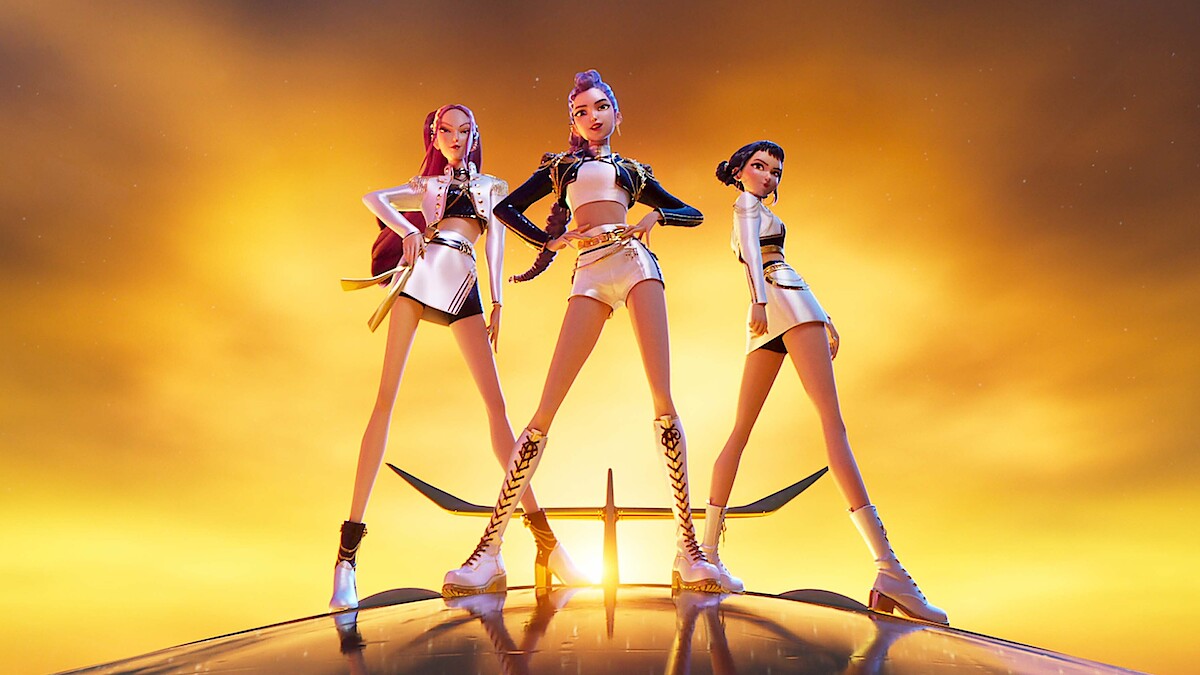
Maggie Kang, co-director of Netflix’s animated series “K-pop Demon Hunters,” revealed that her childhood experiences served as the foundation for this project. Even after moving to Canada at the age of five, Kang spent all her elementary school summer vacations in Korea, where she immersed herself in Korean popular culture by playing with cousins, watching television, and listening to music. “The details in the film also stem from my childhood experiences. I wanted to include everything about Korea in this work,” Kang said. To accurately represent Korean culture, the production team made multiple trips to Korea for on-site research. During the design phase, Kang traveled to Korea with a team of 10 members to explore locations such as Bukchon, Myeongdong, and the Folk Village, gathering ideas from these real-world settings. These firsthand experiences enabled the film’s Korean atmosphere to be meticulously crafted. Kang explained, “I wanted this work to feel as authentic as possible, so I tried to incorporate Korean elements into every design, and many Korean staff members contributed significantly to its creation.” Although produced by Sony Pictures Animation in the United States with most dialogue in English, the series exhibits such a strong Korean flavor that it feels like a Korean film when audio is muted. The series features various elements from Korean Musok beliefs, including spirits known as Jeuseungsaja, Dokkaebi, tiger ghosts, Dangsan trees, and rituals called Gut. These elements combine with K-pop to form a unique worldview. Kang explained that the concept of K-pop girl groups acting as demon hunters who capture evil spirits outside the stage was inspired by shamans and Gut rituals. “Gut involves using music and dance to drive away monsters, which I thought perfectly matched the film’s concept. In a way, Gut could be considered the first K-pop concert,” she said. “K-pop Demon Hunters” is the first musical animated film based on K-pop. Kang recalled, “The challenging part was that no one had ever made a musical film using K-pop before. Composers went through 7 to 8 revisions to finalize the music.” Many composers from The Black Label, including Teddy, participated in the music creation, alongside overseas artists such as ZENA Andrew, who has written songs for BTS multiple times. Kang explained her philosophy behind the music: “Our goal was to create tracks that would be recognized as true K-pop even if released as standalone songs. That’s why collaborating with Korean labels was extremely important. Since I was a fan of Teddy during his OneTime days, I ended up working with The Black Label.” The character designs were inspired by various K-pop groups rather than any single individual. Kang clarified, “We didn’t reference any specific group or member; these characters were created under the influence of all K-pop groups and their members.” However, regarding the character Jinwoo, the leader of Sazaboyz, she said, “He was inspired by Korean drama actors,” specifically drawing motifs from Cha Eunwoo and Namjoo. Special effort was put into expressing the individuality of the HUNTR/X members. Kang explained, “When creating Rumi, Mira, and Joy, my top priority was ensuring they all looked very different from one another. You can tell from Joy’s smile that her mouth shape is nearly heart-shaped. Mira was designed to have a long, slender appearance, while Rumi was crafted to embody a very classic and beautiful Korean aesthetic.” Korean actors also contributed to the voice acting. Ahn Hyo-seop voiced Jinwoo, the leader of Sazaboyz, in English, while Lee Byung-hun portrayed the main villain, Gwi-ma. Kang cast Ahn Hyo-seop after watching “Sanae-matson,” saying, “I got the idea after seeing him speak perfect English on the phone.” Regarding Lee Byung-hun, she emphasized, “As the first Korean artist to break into Hollywood, I personally hold him in great respect and gratitude. It was an honor to work with him.” To perfectly represent K-pop, a large number of Korean professionals contributed to the project. Choreography was handled by RiJung and Jam Republic, known for “Street Woman Fighter 2.” TWICE’s Jeongyeon, Jihyo, and Chaeyoung also participated in the OST creation. Kang expressed her joy, saying, “Collaborating with Jeongyeon, Jihyo, and Chaeyoung was a true honor and proof that we achieved our goal of creating a real K-pop group.” Kang’s early exposure to K-pop was the starting point for this project. She was a fan of first-generation K-pop idols like HOT and Seo Taiji and Boys, and these experiences became the driving force behind making this film decades later. Finally, Kang stated, “Just like K-pop or K-beauty, Americans get excited whenever something has ‘K’ in front of it. Through this phenomenon, I aim to introduce Korean culture in English.”
발행·편집 책임: 국기봉 · KPOP Signal editorialThis article was written with AI from verified source material and passed automated checks before publication. It may contain factual errors. AI disclosure · Request a correction
Comments (0)
No comments yet — be the first to start the conversation.