K-POP Becomes a Global Cultural Phenomenon Through Random Play Dance and International Festivals
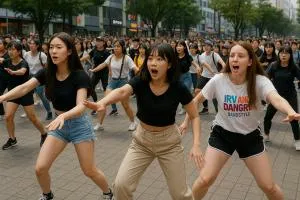
K-POP fanbases are evolving beyond mere music enthusiasts to become full-fledged global cultural movements. Through random play dance challenges and international music festivals, K-POP communities are emerging across the world, generating economic impacts across tourism, education, and various industries. The random play dance originated in the early 2010s on MBC every1’s variety show “Weekly Idol.” It was a segment where idols danced to mixed music, and when fan communities spontaneously recreated this format, it began spreading overseas via YouTube videos. As street performance videos from Hongdae and Gangnam accumulated millions of views, random play dance challenges emerged in major cities such as Paris, New York, Manila, Hanoi, and Berlin, primarily driven by youth from different countries. Berlin, in particular, is experiencing a significant K-POP boom recently. In Asunción, the capital of Paraguay, K-POP communities gained momentum in 2019 with the establishment of TeamFesta. Starting as small events at Korean language schools, K-POP culture solidified as a major cultural phenomenon in the city with the first official K-POP party held in 2019. The founders stated they wanted a safe space where fans could enjoy themselves without judgment, and since then they have continuously organized parties themed around groups like BTS and ATEEZ, new song listening sessions, and K-hop nights. In one event in 2022, 600 attendees showed up, exceeding expectations and proving the expansion of these fan communities. In Austria, K-POP culture is being showcased at the Donauinsel Music Festival, Europe’s largest outdoor music festival. “Inspire Me Korea,” organized by the Korean Cultural Center in Austria since 2022, has reached its fourth edition this year. Artists spanning different generations and genres perform, including Song Soo-hee (whose self-composed song “Not a Dream” has over 13 million YouTube views), musical star Kai, the popular Latin American pop band W24, Im Ji-soo from JTBC’s “Sing Again 3,” and the jazz band “Yongri and the Prodigal Son.” A K-POP DJing performance by DJ HYUNY is also scheduled during the “Electronic Music” stage. During the festival, there are also hanbok experience areas, booths offering information about traveling to Korea, and K-food spaces. In Busan, the 2025 Busan One Asia Festival has begun transforming into a global music festival. The event held from the 11th to the 14th attracted around 40,000 visitors, more than 10,000 of whom were foreigners. The “Big and Band Concert” featuring ATEEZ, LUCY, Tenfit, and BigBang’s Daesung, along with the “Park Concert” headlined by K.Will and Davichi, showcased K-POP on the world stage. Graffiti programs interpreting K-POP and K-art programs were also held in the outdoor plaza. This global expansion is creating economic benefits across the entire K-POP industry. Record labels benefit from increased promotion for new songs, while YouTubers earn income from random play dance videos. The beauty and fashion industries see expanded brand collaborations, and tourism revenue also increases. Hongdae and Gangnam have become pilgrimage sites for fans, leading to the development of tourism-related products. Foreigners who are exposed to Korean culture through K-POP are creating demand for Korean language classes and cultural experiences, while entertainment companies use random play dance participants as a channel to discover new talent. K-POP has transformed fans from mere consumers into content creators by crossing borders. Foreign youth continue practicing dances for random play dance challenges while simultaneously learning Korean culture. Today, K-POP functions beyond music as a medium for spreading Hallyu culture, serving as a “comprehensive cultural content” platform that fosters identity and connection among young people around the world.
발행·편집 책임: 국기봉 · KPOP Signal editorialThis article was written with AI from verified source material and passed automated checks before publication. It may contain factual errors. AI disclosure · Request a correction
Comments (0)
No comments yet — be the first to start the conversation.