K-Pop Animation “KPop Demon Hunters” Captures True Korean Essence Through Cultural Experience and Team Collaboration
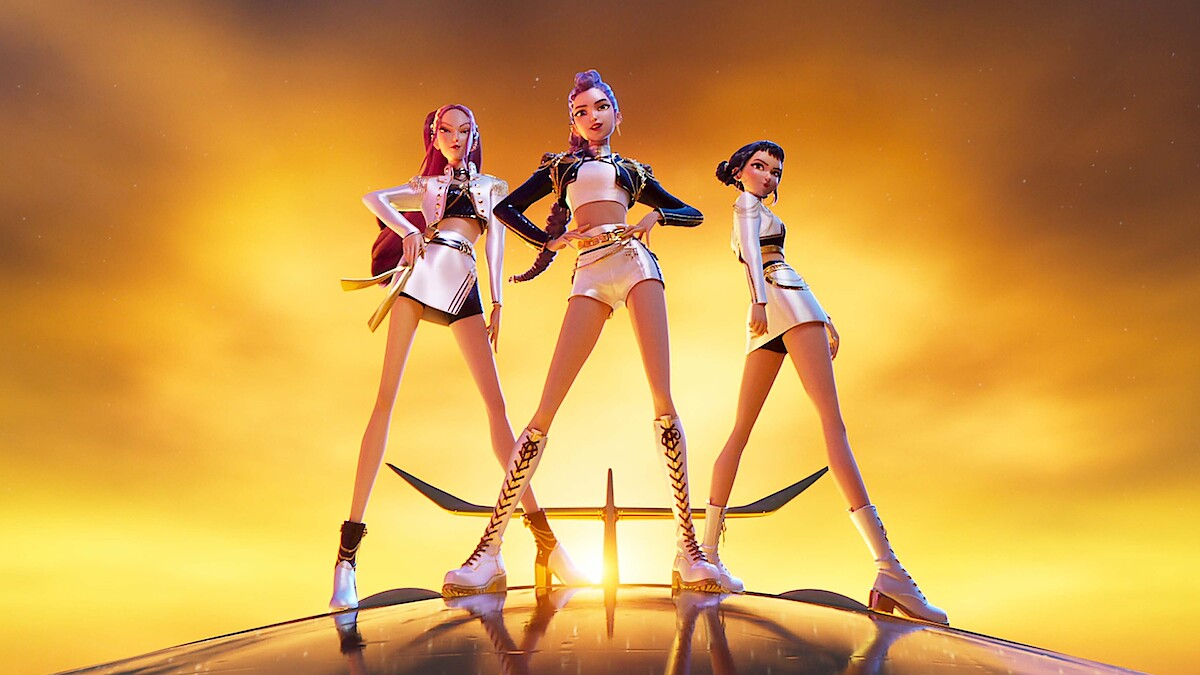
Netflix’s animated film “KPop Demon Hunters” has gained worldwide popularity by delivering an authentic portrayal of Korean culture. Director Maggie Kang, a Korean-Canadian, stated that she aimed to incorporate everything about Korea into the project based on her childhood experiences there. Kang explained, “Even after moving to Canada at the age of five, I spent all my elementary school summer vacations in Korea. Growing up playing with cousins, watching TV, and listening to music allowed me to experience Korean pop culture extensively.” She added, “I wanted this work to be as Korean as possible, so I tried to include Korean elements in every design, and a great many Korean staff members contributed to it.” The production team spent time directly experiencing Korean culture during the design process. Director Maggie Kang and her 10 team members traveled to Korea, visiting places like Bukchon, Myeongdong, and the Folk Village to brainstorm ideas for hanoks, Korean cuisine, and street scenes that would appear in the film. This firsthand experience was meticulously implemented in the movie, resulting in detailed Korean nuances that Koreans can instantly recognize. The unique concept of this work was inspired by Muguk beliefs. Kang explained, “The idea that girl groups are demon hunters who capture evil spirits off-stage came from inspiration drawn from mudang and gut rituals. Gut involves using music and dance to drive away monsters, which I felt perfectly matched the film’s concept.” She added, “In a way, I even think gut might be the earliest form of K-pop concert.” Transforming K-pop into a musical animation was a new attempt. Kang recalled, “The challenging part was that no one had ever made a musical movie based on K-pop before. Composers went through 7 to 8 revisions to finalize the music.” Many composers from The Black Label, including Teddy, participated in the music production, with overseas artists such as ZENA Andrew, who has written songs for BTS multiple times, also listed as composers. Kang explained, “Our goal was to create tracks that would be recognized as true K-pop even if released as standalone songs.” Korean experts were also actively utilized in casting. Ahn Hyo-seop was chosen to play Jin-woo, the leader of the evil idol group Sazaboyz, for his ability to speak English fluently. Kang said, “I usually enjoy watching Korean dramas, and after watching ‘Sanae-matseon,’ I decided to cast Ahn Hyo-seop as Jin-woo.” Lee Byung-hun, the first Korean artist to break into Hollywood, portrayed the main villain, Gwi-ma, and Kang expressed that it was a great honor to work with him. Korean culture is also reflected in character design. Aden Cho, who plays Rumi, a member of HUNTRIX, described her as a character who “defeats evil spirits, sings well, is beautiful, and has excellent fashion sense.” May Hong, who plays Mira, described her as “cynical, rebellious, and sarcastic,” while Yoo Ji-young, who plays Joy, said she is “the youngest in the team, so she is the cutest and most energetic.” The appearance design of the characters is also an interesting aspect. Although fans speculated that the characters of HUNTRIX and Sazaboyz were inspired by certain K-pop artists, Kang clarified, “We did not refer to any specific group or member. They were created under the influence of all K-pop groups and members.” The scene where Sazaboyz performs group dances in costumes resembling underworld messengers wearing gats and dopos also became a topic of discussion on social media. The film features not only underworld messengers but also elements from Korean Muguk beliefs such as dokkaebi, tiger spirits, Dangsan trees, and gut rituals, attracting enthusiasm from both Koreans and foreign viewers. Kang highlighted the film’s global appeal by saying, “Just like K-pop or K-beauty, Americans go wild whenever something has ‘K’ in front of it.”
발행·편집 책임: 국기봉 · KPOP Signal editorialThis article was written with AI from verified source material and passed automated checks before publication. It may contain factual errors. AI disclosure · Request a correction
Comments (0)
No comments yet — be the first to start the conversation.