"I Wanted to Capture Everything About Korea"...The Meticulous Production Process Behind Netflix’s Animated Film "KPOP Demon Hunters"
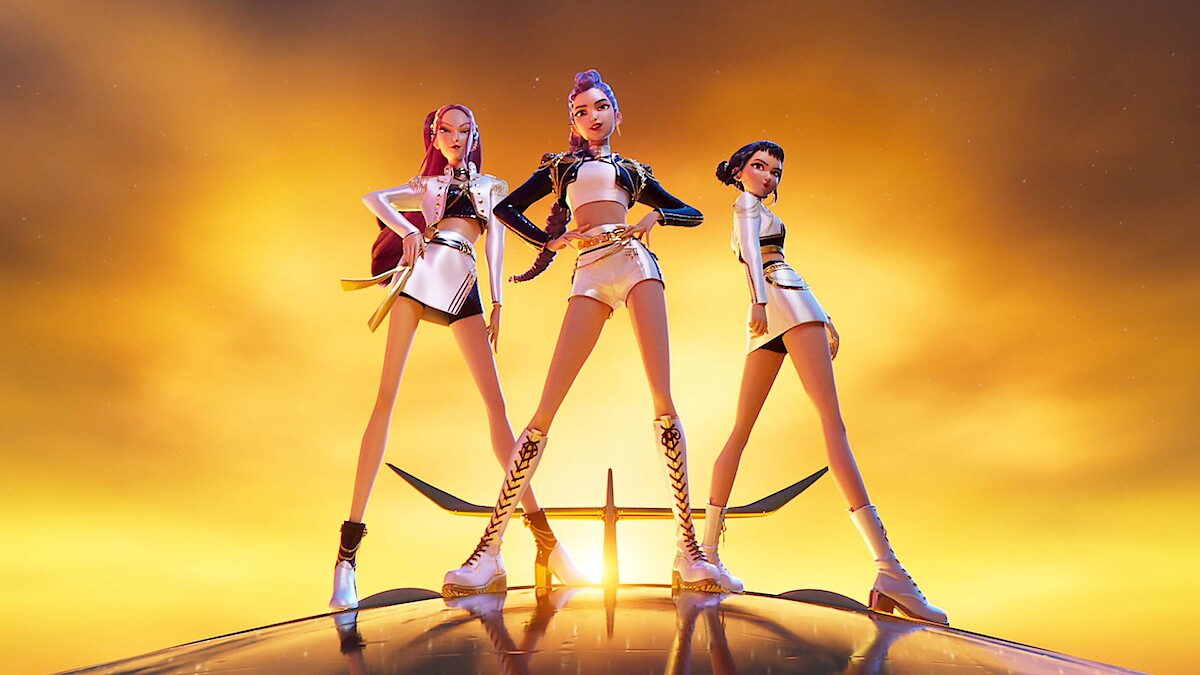
"I moved to Canada at the age of five, but I still spent every summer vacation in elementary school back in Korea. Growing up playing with my cousins, watching TV, and listening to music allowed me to experience a great deal of Korean ‘pop culture,’” said Maggie Kang, the Canadian of Korean descent who co-directed Netflix’s animated film "KPOP Demon Hunters." "KPOP Demon Hunters" is an action fantasy animation about the K-POP girl group HUNTRIX, who act as demon hunters behind the bright lights of stages. Produced by Sony Pictures Animation in the United States and primarily voiced in English, the film features a strong Korean aesthetic. The production team put in significant effort to accurately represent Korean culture. Real locations in Seoul such as Namsan Tower and Bukchon, along with Hanok houses, Korean cuisine, and street scenes, are all depicted realistically in the movie. Director Maggie Kang explained, “I wanted this work to feel as Korean as possible, so I tried to incorporate Korean elements into every design,” adding, “A great many Korean staff members contributed to it.” Specifically, during the film’s design phase, the director visited Korea with a team of 10 people to draw inspiration from places like Bukchon, Myeongdong, and the Folk Village. This on-site research enabled a precise portrayal of the Korean atmosphere in the movie. The reason behind combining K-POP—something that might seem incongruous—with occult themes also stems from Korean traditions. The director explained that the concept of the girl group acting as demon hunters who capture evil spirits outside stages was inspired by mudang and gut rituals. “Gut involves using music and dance to drive away monsters, which I thought fit perfectly with the film’s concept,” she added, “And in a way, I even considered gut to be the earliest form of (K-POP) concert.” The movie is rich with elements from Korean shamanistic beliefs, such as Jeoseungsaja, Dogaebi, tiger spirits, and Dangsan trees. In particular, a scene where the Sazaboyz perform group dances in “Jeoseungsaja costumes” featuring caps and robes has become a hot topic on social media. The music production was also handled with great care. The director noted, “The challenging part was that no one had ever made a musical film using K-POP before,” adding that composers went through 7 to 8 revisions to finish the music. Composers from The Black Label, including Teddy, along with international artists, participated heavily in the music work. She said, “Our goal was to create songs that would be recognized as true K-POP even if released immediately, so collaborating with Korean labels was extremely important. Since I am also a fan of Teddy from his OneTime days, we ended up working together with The Black Label.” Voice actors cast for the film were also Korean celebrities. Ahn Hyo-seop voiced Jin-woo, the leader of the Sazaboyz, while Lee Byung-hun voiced Gwi-ma, the “main villain,” in English. Having watched the Korean drama "Sanae-masseon" before, the director recognized Ahn Hyo-seop’s performance and decided on him for the role of Jin-woo, saying, “Ah, it’s Jin-woo.” Regarding Lee Byung-hun, she emphasized, “Since he was the first Korean artist to break into Hollywood, I personally respected and appreciated him greatly. It was an immense honor to work with him.” The visuals of HUNTRIX and the Sazaboyz also caught the attention of netizens. Some speculated that they were modeled after specific K-POP groups or members, but the director clarified, “We did not refer to any particular group or member. They were created under the influence of all K-POP groups and members.” With over 3 million cumulative views worldwide, "KPOP Demon Hunters" is regarded as an original work that combines K-POP with occult themes, action, and musical elements. The film sets a new standard for Hallyu by blending the tradition of Korean culture, the modernity of K-POP, and global pop culture. This work, filled with Director Maggie Kang’s childhood experiences and sincere passion for Korea, continues to receive enthusiastic responses from global fans—just as she said, “Like K-Pop or K-beauty, Americans go wild whenever something has ‘K’ in front of it.”
발행·편집 책임: 국기봉 · KPOP Signal editorialThis article was written with AI from verified source material and passed automated checks before publication. It may contain factual errors. AI disclosure · Request a correction
Comments (0)
No comments yet — be the first to start the conversation.