Global Expansion of K-Content Spreads to Beauty and Education, Completing a Positive Feedback Loop for Hallyu Through Growing Global Fanbases
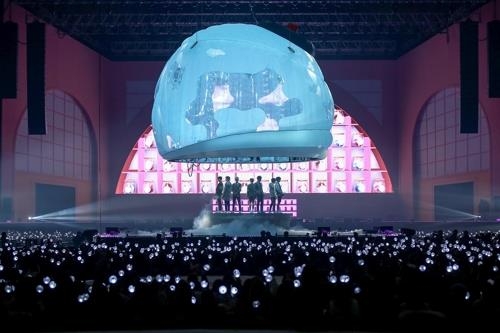
The global spread of Hallyu is generating economic benefits that extend beyond music and video content to include beauty, education, and food industries. The strategy of CJ Group, which has built the foundation for the globalization of K-culture centered around KCON, has borne fruit. Last year, South Korea’s cosmetics exports reached 10.2 billion dollars, a 20.6% increase from the previous year and marking the first time they surpassed 10 billion dollars. K-beauty products are exported to over 170 countries, and Amazon, the world’s largest e-commerce company, saw its K-beauty sales surge by more than 200% in 2024 compared to the prior year. This growth stems from the influence of Hallyu driven by K-content. U.S. cosmetics exports from South Korea, which had been between 200 million and 300 million dollars until 2018, increased to 1.2 billion dollars in 2020 following the Oscar win for the film “Parasite” and BTS’s No. 1 ranking on Billboard. CJ Group is a key player in this expansion of Hallyu. Chairman Lee Jae-hyun and Vice Chairman Lim Mi-kyung recognized the importance of the cultural industry early on and began holding KCON on the world stage starting in 2012. KCON is the world’s largest K-culture festival that combines K-pop performances with K-lifestyle experiences. Despite incurring losses in its first year when 10,000 attendees filled Verizon Amphitheater in Los Angeles, the management decided to double the scale of the event. To date, KCON has been held in 14 locations around the world over the past 13 years, including Asia, the Middle East, Europe, and the United States, with a cumulative offline attendance of approximately 1.99 million people. The American media outlet Variety described Vice Chairman Lim Mi-kyung as a “super producer,” stating that “KCON also played its role as K-pop succeeded in global markets.” Olive Young first opened a pop-up store at KCON in Los Angeles in 2016 and introduced around 210 products from over 70 brands at last year’s LA KCON. Most of the cosmetics featured in these pop-ups were small and medium-sized brands that struggled to enter foreign markets on their own. Small and medium-sized enterprises account for 67.4% of total cosmetics exports, demonstrating that K-content is helping these businesses expand globally. The influence of K-content is also reaching the education sector. As various Korean cultures such as K-POP, K-dramas, and K-food have impacted Northern Europe, local students have developed a strong admiration for South Korea. Three Norwegian folk colleges (Folkehøgskole) have established and are operating departments focused on Korean culture, including K-POP. Students learn Korean listening, writing, reading, and speaking, as well as Korean culture, taekwondo, Korean cuisine, Korean music, and webtoons, and visit South Korea for graduation study trips. Not only in Norway but also in other Northern European countries, the number of students choosing Korean culture majors in folk colleges is steadily increasing, with new related programs being introduced. K-health products are also benefiting from the growing global fanbase, as evidenced by a TikTok video showing American rapper Cardi B consuming Jeonggjujang ginseng that surpassed 1 million views. Cardi B said, “I’m in my 30s and just had a baby, so I’m extremely sleepy and tired these days. But after taking Korea’s Eobritime ginseng, I feel completely alert.” A Jeonggjujang official noted, “The response from Americans to the video where America’s top rapper Cardi B mentioned Eobritime has been very enthusiastic. We plan to actively develop locally tailored products and expand our distribution network to further penetrate global markets.” CJ Group Chairman Lee Jae-hyun emphasized, “Historically, the prerequisite for an economic powerhouse is a cultural powerhouse. If South Korean companies want to survive in global markets, they must ultimately find answers in cultural products.”
발행·편집 책임: 국기봉 · KPOP Signal editorialThis article was written with AI from verified source material and passed automated checks before publication. It may contain factual errors. AI disclosure · Request a correction
Comments (0)
No comments yet — be the first to start the conversation.