From Rhythm Patterns to Musok Culture: How Modern Interpretations of Korean Traditional Music Meet Global Content
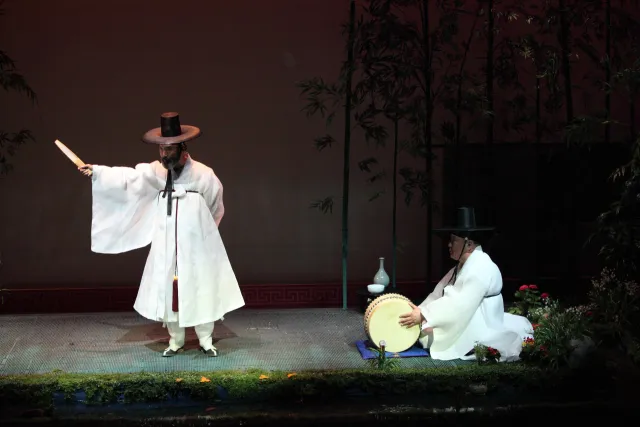
The aesthetic value of Korean traditional music is being reexamined within modern cultural works. Haegum performer Son Hye-jin highlights the depth of “jangdan,” the core element of traditional music, while Netflix’s “K-pop Demon Hunters” offers a modern reinterpretation of Musok culture. According to Son Hye-jin, jangdan is more than just a rhythm pattern—it is the soul of Korean music. “When playing the haegum, there are moments when it feels as though I am producing sound not with my bow but with my breath,” she explained. “It is jangdan that guides my music at such times.” “As a performer, I often describe jangdan as an ‘invisible hand.’ Whether during intensely tense moments on stage or when excitement makes my body move spontaneously, it is ultimately jangdan that keeps the music stable.” Jangdan is a language beyond mere rhythm. It not only guides the flow of music but also determines the emotional fluctuations and the pacing of performance. Even the same piece of music transforms completely with different jangdan patterns, thanks to the concept of “hanbae” embedded within it. Hanbae refers to the sense of speed and slowness, and Korean traditional music uses the subtleties and variations of hanbae to finely adjust emotional tones. The slowest jangdan pattern in pansori, known as jinyangjo, uses a gentle hanbae to resonate deeply in the listener’s heart. In contrast, the fast jajinmori pattern generates excitement through brisk rhythms and intensifies emotions. Korean jangdan primarily embodies two distinct emotional qualities. The first is the aesthetics of “yeobae” found in slow jangdan patterns. In slow jangdan used in folk music like jinyangjo or in refined classical music, silence often creates a more powerful musical effect than sound itself. The pauses between beats breathe life into the music’s flow and give listeners time to reflect on their emotions. The slow jangdan used in court music fosters a solemn and dignified atmosphere even in moments of silence rather than performance. The second quality is the “sinmyeong” found in fast jangdan patterns. Fast jangdan such as jajinmori and huimori, used in pansori, sanjo, and saml놀이, make listeners’ shoulders shake and their feet tap. Notably, Korean jangdan features a unique rhythmic structure called “honmbap.” Honmbap involves mixing different beat patterns—such as 2-beat and 3-beat sequences—within a single jangdan pattern, a structure rarely seen in Western music. A prominent example is the “eotmori” jangdan pattern, where 3-beat and 2-beat sequences alternate to create a sense of balanced imbalance. The origin of this honmbap can be traced back to Musok music. Korean Musok music is a religious genre that connects gods and humans, with jangdan patterns changing freely depending on the situation and emotions. In rituals like Gyeonggi-do dangut and Donghae-an byeolsin-gut, unique, complex, and improvised jangdan patterns emerge, adapting spontaneously based on the shaman’s emotional state and the ritual’s purpose. This improvisational nature and mixed rhythmic structures have influenced folk music and pansori, contributing to the uniqueness of Korean music. Buddhist music, such as beompae, also possesses distinct rhythmic characteristics. Though beompae may appear rhythmless at first glance, it actually forms a highly intricate structure through long breaths and irregular rhythms. The complex rhythms of beompae, like hotsori and jitsori, convey meditation and deep tranquility to listeners. Thus, a common feature across the roots of Korean music is “irregularity.” While most music maintains regular rhythms, these religious genres intentionally incorporate irregular rhythms, which add vitality to jangdan patterns, enhance listeners’ focus, and create unique tension and excitement. These cultural values of Korean traditional music are recently being reinterpreted in global content as well. Netflix’s “K-pop Demon Hunters” features three K-pop idol groups named “Huntrix” acting as demon hunters, transforming traditional Korean Musok rituals into a hypermodern stage setting. The concept that Huntrix’s concerts create a “Honmoon”—a transparent barrier between the human world and the world of demons—represents a modern reinterpretation of how Korean Musok facilitates communication between gods and humans. The film honestly portrays not only the bright sides of K-pop culture but also its darker aspects. It realistically exposes structural issues in K-pop culture, such as leadership obsession, parasitic relationships, an obsession with purity, and the capricious nature of fandoms. The plot, in which demons named “gwaema” feed on human souls and teenagers’ anxieties, serves as a metaphor for the psychological exploitation within the K-pop industry. The storyline involving a male demon group called “Sajaboyz” stealing fans to harvest their souls and dominate charts dramatizes the competitive dynamics of the K-pop industry and the depth of fandoms. This film is not merely a K-pop fan narrative. It carries the authenticity of works by master filmmakers like Park Chan-wook and Hong Sang-soo while simultaneously illuminating the cultural depth of K-pop. As jangdan, the soul of Korean traditional music, and the spirituality of Musok culture are integrated into modern K-pop content, Korea’s cultural heritage is reaching a deeper audience globally.
발행·편집 책임: 국기봉 · KPOP Signal editorialThis article was written with AI from verified source material and passed automated checks before publication. It may contain factual errors. AI disclosure · Request a correction
Comments (0)
No comments yet — be the first to start the conversation.