Five Major K-POP Organizations Emphasize Validity of Exclusive Contracts in NewJeans NJZ Dispute
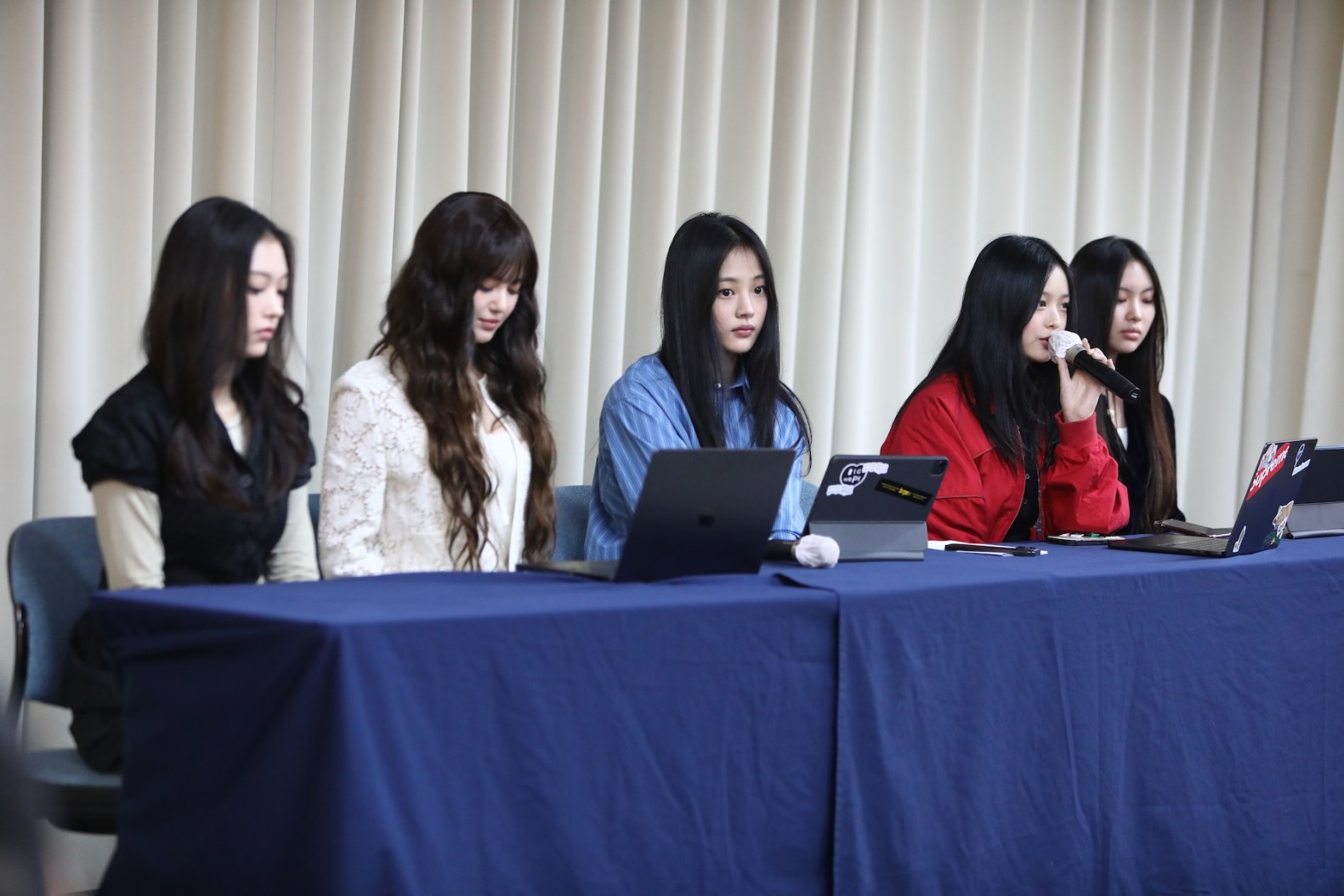
As NewJeans sought to invalidate its contract with AEDOR and rebrand itself as “NJZ,” five key organizations in South Korea’s music industry held a press conference on the 28th at a hotel in Seocho-gu, Seoul. During the event, they stressed the validity of exclusive contracts and the importance of maintaining trust within such agreements. The organizations organizing the conference were the Korean Management Federation, the Korean Entertainment Producer Association, the Korean Record Industry Association, the Korean Music Album Industry Association, and the Korean Music Content Association (KMCA). Building on a statement released on February 19th, they once again highlighted the severity of the “tal-tal-i” phenomenon—where artists switch agencies mid-contract—and the necessity of abolishing exclusive contracts. Steve Choe, general secretary of KMCA, said in his keynote address, “Our industry is built on promises. If those promises are kept, we can create a sustainable industry.” He introduced the “3ECT” principles—Connect, Respect, Protect—as ethical standards for the industry. Choe warned that the value of exclusive contracts is under threat, pointing out cases where competing agencies or externally funded parties urge artists to break ties with their current companies. He also noted that fan attitudes supporting artists’ departure from their agencies weaken the position of entertainment companies. “The common belief that agencies hold all the power is a misconception,” he explained, adding that new agencies fear that an artist’s success might lead to unilateral contract termination. Regarding the dispute between NJZ and AEDOR, an HYBE subsidiary, Choe said, “We do not know the full details of this case, and we do not want to take sides.” However, he added, “There is a saying that what a famous person says is innocent, while what an unknown person says is guilty,” effectively siding with the agencies. Kim Myung-soo, president of the Korean Entertainment Producer Association, proposed establishing a legal framework to address “tal-tal-i.” He emphasized the need for legal provisions that prohibit unilateral activities during the remaining contract period even if relationships are damaged due to contract disputes, thereby rendering “tal-tal-i” meaningless. Choe stressed that the “tal-tal-i” issue is not limited to a few large agencies but has spread like a virus throughout the independent music scene, highlighting the severity of the problem across the industry. He also argued that current artist-friendly standard contracts, which have been in use for over a decade, should be revised to fit the industry’s changing environment.
발행·편집 책임: 국기봉 · KPOP Signal editorialThis article was written with AI from verified source material and passed automated checks before publication. It may contain factual errors. AI disclosure · Request a correction
Comments (0)
No comments yet — be the first to start the conversation.