First K-POP Performances in China in 9 Years as Cultural Ties Improve
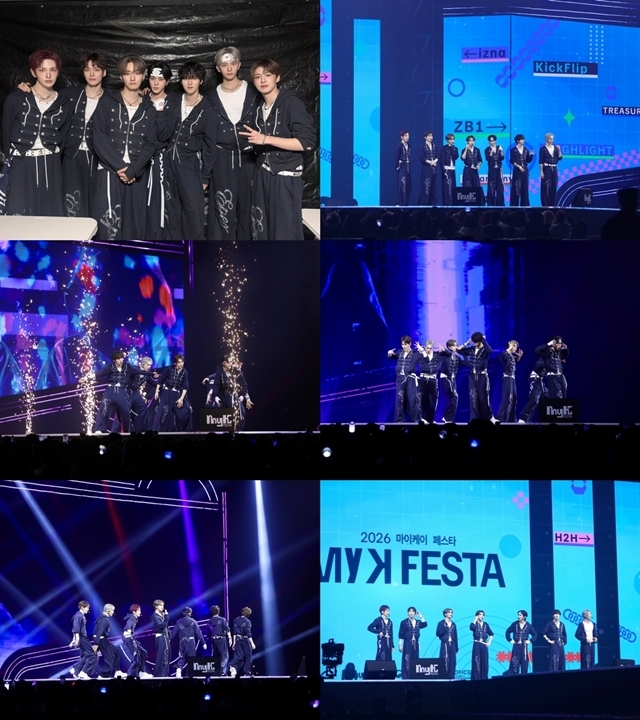
China has permitted K-POP performances in the country for the first time in 9 years since the THAAD dispute in 2016, signaling a genuine improvement in bilateral cultural relations. The South Korean male K-POP group Epex is set to hold a concert in Fuzhou City on May 31. Announced officially by C9 Entertainment on April 28, this performance marks the first time in 9 years that a fully Korean K-POP group will perform on Chinese mainland soil. Even more noteworthy is the confirmation that Dream Concert, South Korea’s longest-running K-POP event, will take place on September 26 at a stadium with a capacity of 40,000 seats in Hainan Province. The Korean Entertainment Producers Association explained that this event represents one of the largest K-POP events held on Chinese mainland in several years. This decision reflects a shift in Chinese government policy. It is reported that China Central Television (CCTV) is planning large-scale Sino-Korean joint concerts in six major cities—including Beijing, Shanghai, Guangzhou, Shenzhen, Chongqing, and Chengdu—during the second half of this year, and has sent official documents to South Korean event organizers regarding permission for a “Sino-Korean Joint Concert Project Cooperation” in the second half of 2025. These concerts are expected to be held in gyms capable of accommodating around 30,000 people and are likely to be broadcast across China. Recent months have seen a series of approvals for K-POP performances in China. Concerts by the South Korean rapper group Homidles and trot singer Yoon Soo-hyun have also been successively authorized. Chinese Foreign Ministry spokesperson Guo Jiakun stated, “We are open to cultural exchanges and cooperation with South Korea and will work together to advance bilateral relations.” Experts are analyzing this policy shift from various perspectives. Economically, China faces an urgent need to boost domestic demand amid trade tensions with the United States. With consumer spending falling below 70% of GDP, South Korea holds significant strategic value as one of China’s top three markets for album exports and Asia’s second-largest music market. At the same time, China is seeking to improve relations with regional countries to counter U.S. protectionism. However, reactions among Chinese netizens are mixed. Some criticize the move, saying, “They’ve made concessions to South Korea even though THAAD has not been removed,” while others argue that only groups with Chinese members should be allowed to perform. Nevertheless, experts believe this measure could serve as a “structural turning point” for the K-POP industry, predicting that future large-scale concert events will be key indicators of China’s evolving policies.
발행·편집 책임: 국기봉 · KPOP Signal editorialThis article was written with AI from verified source material and passed automated checks before publication. It may contain factual errors. AI disclosure · Request a correction
Comments (0)
No comments yet — be the first to start the conversation.