Controversy Over Recording Equipment at Malaysian Concert Sparks Deeper Tensions in K-pop’s Global Fanbases
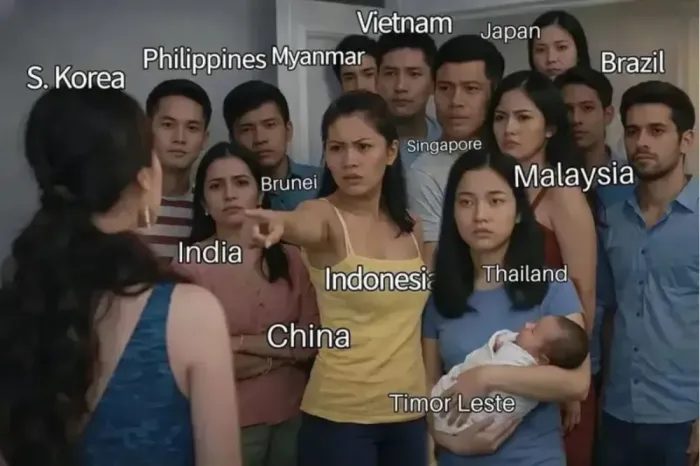
Online conflicts have intensified between fans from South Korea and Southeast Asia following a concert by K-pop group DAY6 in Malaysia. Disputes over Korean fans bringing in prohibited professional recording equipment at the venue escalated on social media into country-level hostility, with racial slurs emerging as well. This situation exposes structural issues within fanbases as the K-pop industry expands globally.
At a DAY6 concert held in Kuala Lumpur, Malaysia, in January, some Korean fans attempted to use specialized recording gear that was restricted from being brought in. Local fans criticized this behavior on social media, arguing that it showed a lack of respect for concert rules. In response, Korean netizens took their side, leading to an online argument between the two groups. Southeast Asian fans united under the hashtag “SEAblings” (a portmanteau meaning “siblings from Southeast Asia”), causing the conflict to spread rapidly.

The debate originated on X (formerly Twitter) and quickly spread to platforms such as YouTube, Instagram, Facebook, and TikTok. Posts related to the “Knetz vs SEAblings” issue garnered 18,000 mentions and over 222 million engagements. As both sides mocked each other, the conflict deepened, with some Korean netizens posting racially discriminatory content that insulted the appearance and skin tone of Southeast Asians.

This is not the first time such conflicts have occurred. Since the early 2000s, some Southeast Asian fanbases have raised “whitewashing” accusations, claiming that K-pop idols’ makeup and styling make their skin tones appear excessively fair. Repeated online arguments with Korean fanbases have only deepened these tensions over time. Cultural critic Kim Heon-sik analyzed the phenomenon as follows: “As K-pop expands worldwide, its fanbases have become mixed environments from various cultural backgrounds, leading to conflicts between differing interests and perceptions.”

What is particularly concerning is the tendency for specific incidents online to generalize into country-level conflicts. Critic Kim stated, “Interpreting a few cases as problems affecting entire fanbases of a particular country is an overreach. Extreme examples are being generalized across the entire fan culture, further intensifying tensions.”

Southeast Asia is an important market that cannot be ignored in the K-pop industry. In 2023, the K-pop industry generated approximately $900 million in revenue from overseas markets, with Indonesia being the largest market in Southeast Asia. Its large population, high proportion of young people, and active consumption of content through online platforms have made it a key hub for K-pop’s global expansion. The rise of BLACKPINK’s Thai-born member Lisa as a world-famous star has significantly expanded the size and influence of Southeast Asian fanbases. Recently, new girl groups like Hearts2Hearts, with members such as Indonesian-born Carmen, are also contributing to the diversification of these fanbases.

As a result of this conflict, many Southeast Asian fans are calling for a boycott of K-pop concerts and a rejection of Hallyu culture. Mumpuni Ken Desti, an Indonesian who has been a K-pop fan for over 10 years, said, “My perception of Korea has changed. Now, when thinking about traveling abroad, Korea is no longer a top priority.” Instead, he follows Indonesian girl group No Na and is distancing himself from K-pop.

There are concerns that fanbase conflicts could escalate beyond simple online arguments to cause actual economic losses and cultural clashes. Countries such as the Philippines, Thailand, and Indonesia have played pivotal roles in the spread of Hallyu. If fanbase conflicts solidify into country-level hostility, they could severely impact content consumption and cultural exchanges, even affecting the quality and safety of tourism in popular destinations for Koreans. Critic Kim emphasized, “Given that it has grown into a global industry, it is now urgent to implement meticulous fan community management and self-regulation that takes into account cultural sensitivities in different countries, rather than simply focusing on concert revenue.”
발행·편집 책임: 국기봉 · KPOP Signal editorialThis article was written with AI from verified source material and passed automated checks before publication. It may contain factual errors. AI disclosure · Request a correction
Comments (0)
No comments yet — be the first to start the conversation.