Accelerating Growth Rates of New K-Pop Groups as Agencies Shorten Generation Turnover Cycles
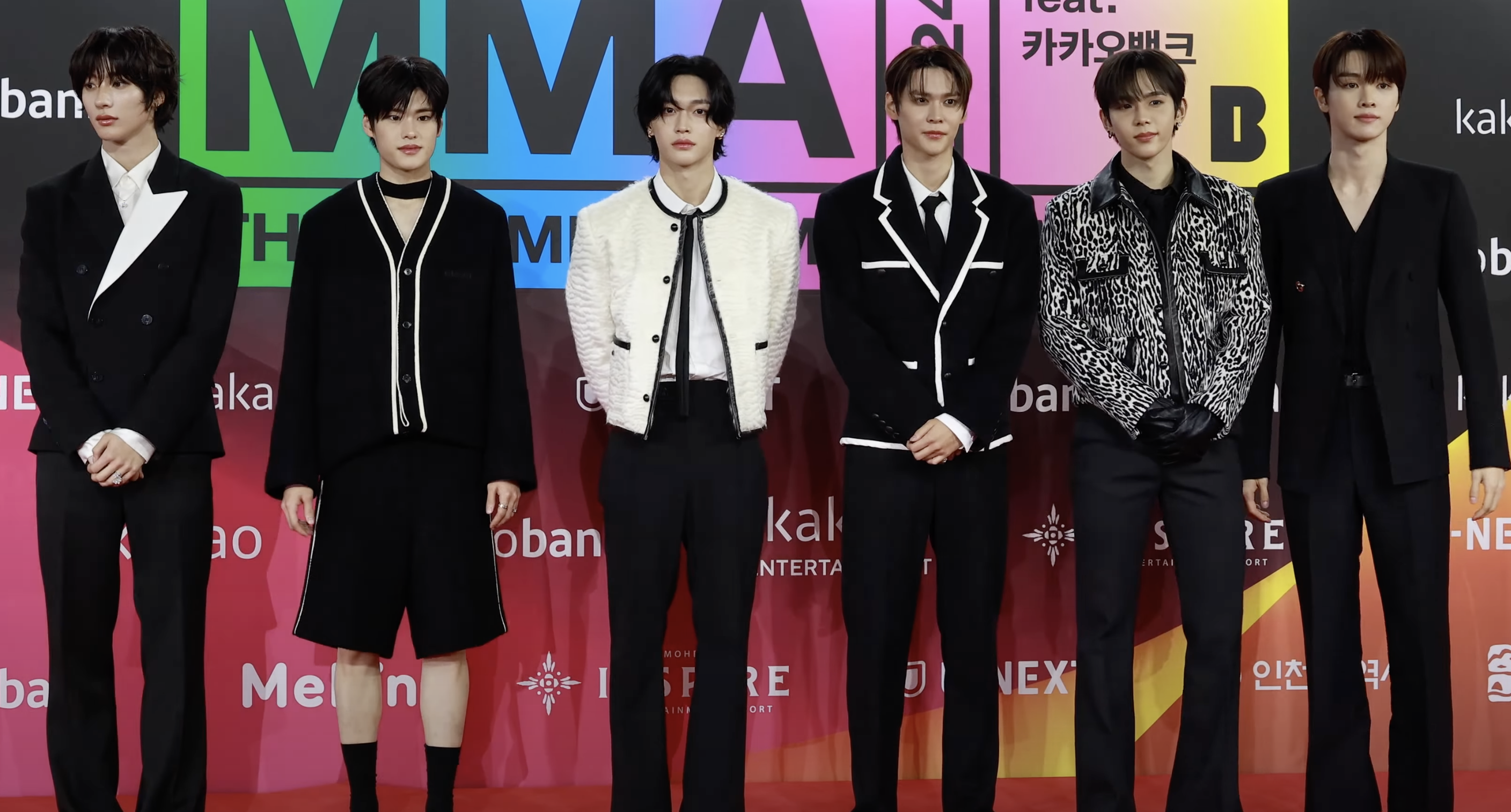
Korea’s major K-pop agencies are rapidly shortening the time between the Debut of new groups. They have shifted from the previous approach of preparing a successor group only after a star group completed its activities to a strategy of managing multiple groups simultaneously. This change is believed to be aimed at responding to the recent trend of faster fanbase inflow and outflow, as well as ensuring steady revenue by having groups active year-round with continuous succession. Taking SM Entertainment as an example, the generation turnover cycle has clearly shortened. It took 8 years after the first-generation representative group HOT debuted in 1996 for the second-generation group TVXQ! to appear in 2004. From the second generation to the third-generation group EXO, which debuted in 2012, it took 4 years. The fourth-generation group NCT debuted 4 years later, while the fifth-generation group RIIZE made its debut 7 years after that. After former CEO Lee Soo-man left SM in 2023, the company unveiled its “SM 3.0” vision and declared it would shorten the new group Debut cycle from “one group every 3.5 years” to “two groups per year.” JYP Entertainment is showing a similar trend. It has released new groups at an average interval of 6.5 years, with god debuting in 1999, 2PM in 2008, GOT7 in 2014, Stray Kids in 2018, and KickFlip in 2025. The company plans to launch projectC, a boy group composed entirely of Chinese members, in the second half of this year. Yang Hyun-suk, CEO of YG Entertainment, said, “Currently, YG has two male groups and two female groups preparing for their Debut. We definitely want to launch one boy group next year.” Amid this strategy of generation turnover, new groups are also growing faster. BURVEY — consisting of Juha, Ju-a, Yu-i, Seo-yoon, and Yu-ran — debuted as a kids idol in May 2020 and remained active for an average of 14.4 years before officially debuting as a K-pop group with “clap” in November of the previous year. Just 7 months after their official Debut, they released their first mini-album, “AEIOU.” Leveraging their stage experience from their kids idol days, the members demonstrated solid skills in music show performances. Park Sung-ho, CEO of BURVEY’s agency Onwan Entertainment, explained, “While BURVEY wasn’t without considering a Debut in another group later on, we wanted to develop them into a group with a long history and focus on growing them as a teen group. From the start, our goal has been to build a group that grows together.” The new group UDTT — made up of Risa-ko, Chae-hee, Hannah, Ye-jin, and Woo-jeong — also proved its excellent performance from the beginning of its career. Appearing on ArirangTV’s “Simply K-Pop” recently, UDTT debuted in a fresh school-style outfit and delivered a perfect performance of their debut song “REALLY REALLY.” This song, which expresses the sweet yet bittersweet emotions of first love through its catchy melody, poetic lyrics, and the group’s energetic vibe, has captivated listeners. It has continued to show strong momentum, with the first edition of their debut single album “School Rush” selling out instantly. New groups targeting the global market are also emerging. cosmosy, produced by former BLACKPINK creative director SINXITY, is considered the first representative of the sixth generation of K-pop. Composed of Japanese members Amei, Kamión, Himesha, and De_Hana, cosmosy was trained using the K-pop system in Korea and performs in a mix of English, Japanese, and Korean, aiming at the mainstream music market. Studio & Live, the entertainment division of Japan’s major telecom company NTT DoCoMo, and Sony Music Korea are in charge of cosmosy, which released its official debut song “Lucky=One” in April last year. This rapid growth of new groups stems from changes in agencies’ business strategies. In the past, album sales and concerts accounted for the vast majority of revenue, making it difficult for each group to maintain a fanbase larger than a certain scale. However, as major agencies such as HYBE, SM, JYP, and YG grew into companies worth billions of dollars, they gained the financial strength to manage multiple groups simultaneously. The trainee market has also expanded, allowing agencies with abundant trainee pools to adjust new group Debut timelines more flexibly. Experts in the K-pop industry predict that this trend of shorter new group Debut cycles will continue to accelerate as the K-pop market develops economies of scale.
발행·편집 책임: 국기봉 · KPOP Signal editorialThis article was written with AI from verified source material and passed automated checks before publication. It may contain factual errors. AI disclosure · Request a correction
Comments (0)
No comments yet — be the first to start the conversation.