7-Year Contract Term: A “Shackle” on K-Pop’s Global Expansion... NewJeans Dispute Resolved After One Year
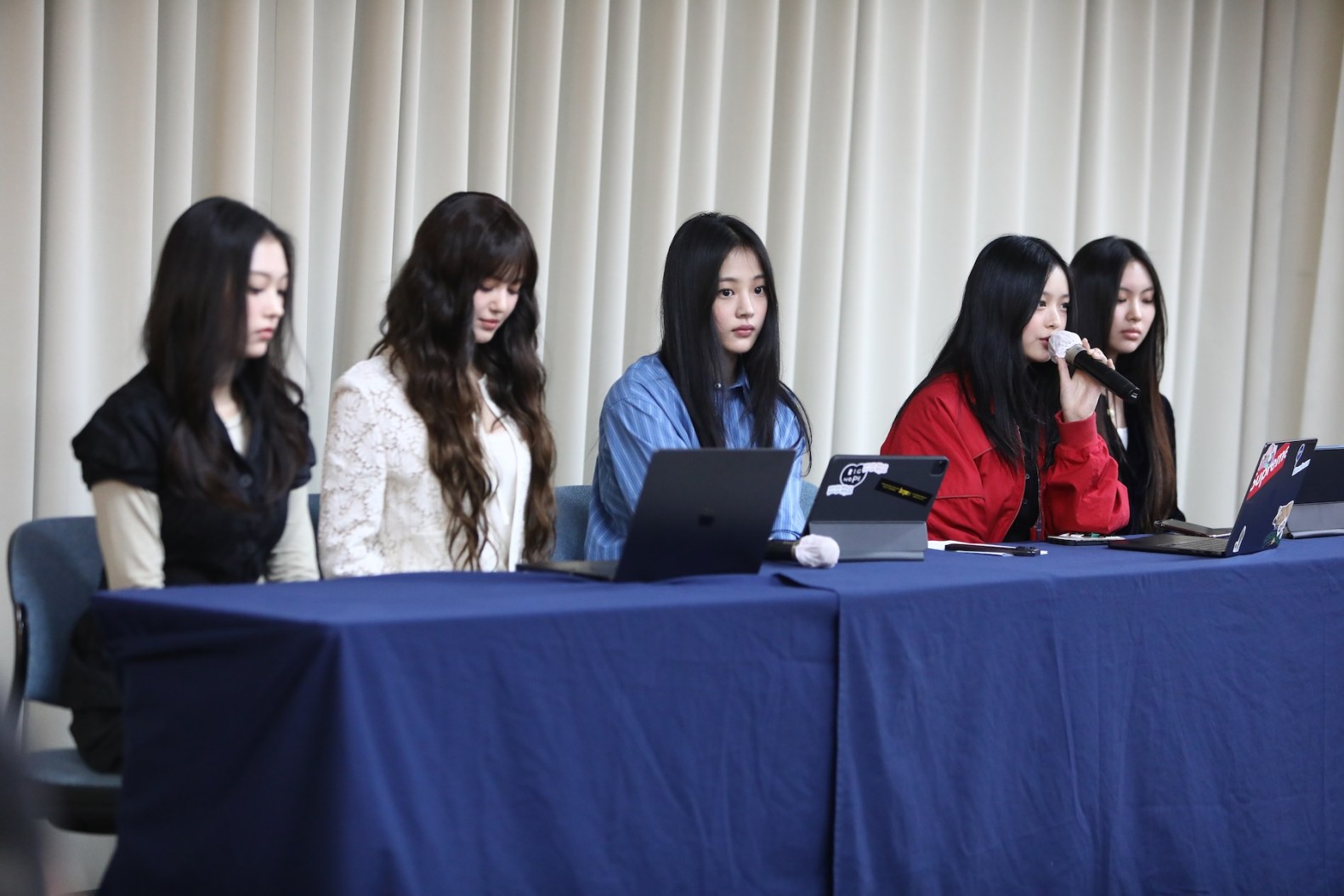
The biggest dispute in the K-Pop industry has come to an end. Nearly 11 months after NewJeans announced the termination of its exclusive contract with ADOR on November 28, 2024, the Seoul Central District Court ruled on October 30, 2025, that the contract between NewJeans and ADOR was valid. With all members now expressing their desire to return to ADOR, the dispute is effectively over. What makes this case particularly noteworthy is its timing. Unlike the exclusive contract dispute filed by TVXQ! against SM Entertainment in 2009, the NewJeans case arose at a time when K-Pop companies were pursuing global expansion. It has served as a signal revealing structural contradictions within the entire K-Pop industry. The roots of K-Pop can be traced back to 2009. The social backlash triggered by the lawsuits filed by TVXQ! members led to the Fair Trade Commission establishing the “Standard Exclusive Contract Agreement for Popular Culture Artists.” At its core was a limit on contract duration of “7 years.” This rule was intended to restrict previously extremely long contracts that lasted 13 years, thereby ensuring artists’ freedom to choose their careers and preventing violations of their personal rights. Since then, the standard contract agreement has been revised several times to keep up with changes in the times, including the addition of regulations for protecting trainees in 2018 and amendments regarding intellectual property rights and profit distribution announced in June 2024. The problem lies in the rapid changes in the industry environment. According to the Korea Content Industry Agency, as of 2025, the average cost to launch a fourth-generation or fifth-generation idol group and reach break-even point exceeds 10 billion won. This is because costs for global promotions, world tours, and high-quality content production have increased exponentially. Small agencies invest an average of 30 to 50 billion won per new group debut, all of which are upfront investment risks borne by the agencies themselves. As a result, the time required to recover these investments has significantly increased. While in the past groups began generating profits two to three years after debut, this period has now been pushed to four to five years. An official from a large agency noted, “The period during which a company can maximize profits is merely 2 to 3 years.” Yoon Dong-hwan, head of the Korean Music Federation, also complained, “Investments have become so large that it takes over three years just to recover the principal. Creating a meaningful profit structure within a 7-year contract term has now become almost impossible.” The outcome is a structural contradiction for agencies and a time dilemma for artists. Agencies fall into a vicious cycle where, as soon as they enter the profit-making phase, the contract renewal season arrives. For artists, 7 years is an “ambiguous” period. In a rapidly changing industry landscape, this duration is long enough for an artist’s image to be completely exhausted. The increasing number of idol members separating their personal activities from group activities or filing applications to suspend the validity of their exclusive contracts before they expire illustrates this point. Discussions on solutions within the industry are also underway. Bang Min-soo, chairman of the newly established Idol Union, argues that the contract term in the standard agreement should be reduced from 7 years to 5 years. His reasoning is that, considering an idol’s lifespan and experience, 5 years is the maximum limit they can compromise with agencies. He also sharply criticized the current system, stating, “99% of unknown idols are forced by companies to perform at local festivals indiscriminately or are simply abandoned in an attempt to recover investment costs.” Agencies face their own deep concerns. Lee Nam-kyung, director of the Korea Management Association, explained, “Given the industry’s tendency toward failure rather than success, keeping a group that continues to incur losses for 7 years is a huge loss for the company. While we want to stay with artists who are profitable, we need flexibility to part ways with those who are not.” In essence, what agencies desire is not long-term contracts but “contract flexibility.” Ultimately, the figure of 7 years acts as a “limit on profit generation” for large agencies and a “period of denied opportunity” for unknown idols, squeezing both sides. As K-Pop expands into global markets, it is urgent to conduct a fundamental review of the industry’s structure.
발행·편집 책임: 국기봉 · KPOP Signal editorialThis article was written with AI from verified source material and passed automated checks before publication. It may contain factual errors. AI disclosure · Request a correction
Comments (0)
No comments yet — be the first to start the conversation.